


Skip to content
Back to results

Take creatine

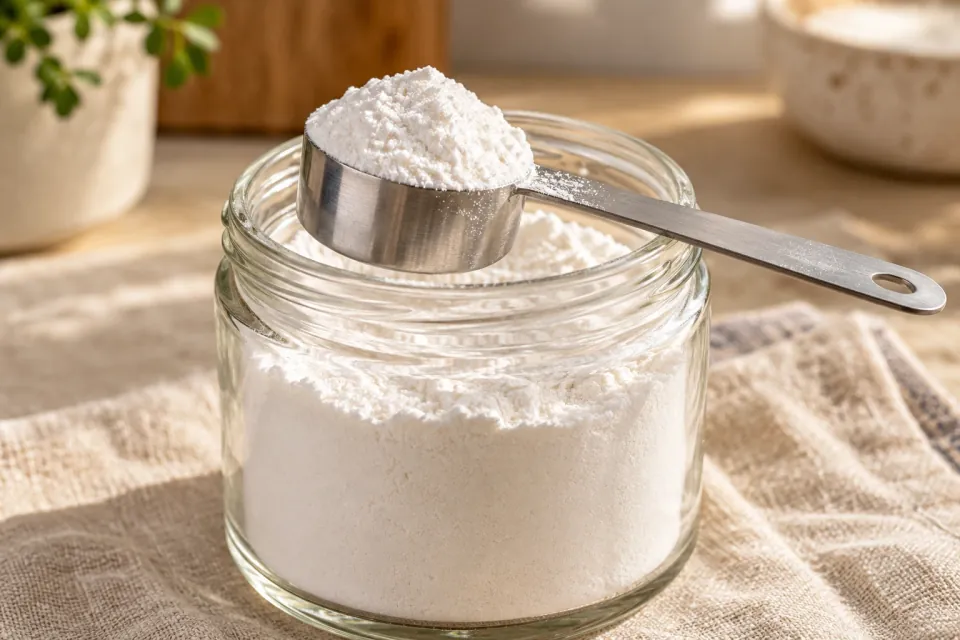
Taking a small daily dose of creatine monohydrate, usually mixed into a drink, as a long-term supplement rather than as a one-off performance boost.

At a glance

  • Evidence: Creatine plus resistance training adds about 1.4 kg more lean tissue and small-to-moderate extra strength gains versus training plus placebo.Muscle strength and lean tissue mass · Strong certainty · Randomized intervention
  • What’s uncertain: Trials are small and responses vary; results in trained or active people may not transfer to sedentary beginners.
  • First step: Use creatine monohydrate rather than a branded variant; it is the form used in essentially all of the trials behind these numbers.
  • Before you try it: Do not start creatine on your own if you have kidney disease, reduced kidney function or a single kidney; these groups were not covered by the reassuring safety data. All precautions
Read the full takeaway

Strength and training

This is the supplement in this catalogue with the strongest evidence behind it, and the evidence is specifically about muscle. Taken with resistance training, creatine monohydrate produces a modest but reproducible extra gain in strength and lean mass, and the effect appears across multiple meta-analyses of randomised placebo-controlled trials in younger and older adults.

Other outcomes and safety

The rest of the popular case does not hold up nearly as well. For cognition, pooled effects are small and inconsistent, the benefits concentrate in older adults and in people whose brain creatine is already low, and the meta-analysis that pooled younger healthy adults found essentially nothing (SMD 0.03). Safety in healthy people looks good, but that is a statement about the people studied - mostly healthy athletes and older adults - and not about people with existing kidney disease, where the question has not been answered and where creatine also raises serum creatinine, clouding the test used to monitor kidney function.

NutritionExerciseLong-term healthUnder 10 min · Easy · Low
Reviewed Sep 23, 2026
Save

Scientific evidence

What the research shows

Outcome assessments based on research, including its uncertainties and limitations.

Muscle strength and lean tissue mass

Finding: Benefit supportedCertainty: Strongstudies found a benefit from doing this

Evidence basis: randomised trials

Creatine plus resistance training adds about 1.4 kg more lean tissue and small-to-moderate extra strength gains versus training plus placebo.

Population: Randomised placebo-controlled trials in healthy adults doing resistance training: 721 older adults (mean ages 57-70) across 22 trials of 7-52 weeks; 357 older adults across trials of about 12.6 weeks; 60 randomised trials with 1,297 participants in younger and older strength-trained groups; and a meta-analysis of 250 supplements, of which only 6 had more than 2 studies, in adults doing resistance exercise.

Research details

Summary

A meta-analysis of 22 randomised controlled trials in 721 older adults taking creatine or placebo during resistance training 2-3 days a week for 7-52 weeks found greater increases in lean tissue mass with creatine (mean difference 1.37 kg, 95% CI 0.97-1.76), chest press strength (SMD 0.35, 95% CI 0.16-0.53) and leg press strength (SMD 0.24, 95% CI 0.05-0.43), so the upper-body effect is the larger of the two strength estimates. Independent meta-analyses agree on the direction but not on every endpoint: an earlier analysis in 357 older adults found that creatine plus resistance training increased total body mass (P = 0.004), fat-free mass (P < 0.0001) and 30-second chair-stand performance (P = 0.03) over training alone, with no difference in knee extension or biceps curl one-repetition maximum or in isokinetic or isometric knee-extension peak torque; and a pooled analysis of 60 randomised trials (646 creatine participants, 651 controls) found an effect size of 0.336 (95% CI 0.047-0.625) for squat and 0.297 (95% CI 0.098-0.496) for leg press in efforts under three minutes. In younger populations the same pattern appears: a meta-analysis of 250 supplements found that creatine significantly increased net lean mass gains of 0.36% per week and strength gains of 1.09% per week during resistance training, and a review of 22 studies reported an average strength gain 8% greater with creatine than placebo (20 vs 12%). The authors of the older-adult meta-analysis note that the mechanisms by which creatine produces these effects have yet to be evaluated extensively, and the other reviews state that the response is highly variable between individuals and that further work is needed.

Why this certainty

This is the strongest evidence base in the catalogue: multiple independent meta-analyses of randomised placebo-controlled trials, using muscle-relevant endpoints, agree on both direction and rough magnitude, in younger and older adults. It is rated Strong rather than Moderate on that basis. It is not rated higher than Strong because the trials are individually small with variable responsiveness, the pooled analyses do not report the full pre-specified protocol or funnel-plot assessment in the retrieved text, and the surrogate nature of the endpoints means the effect on function and clinical outcomes is not established by these data.

Limitations

Trials are small (typically a few dozen participants), and the pooled heterogeneity in the lower-limb analysis is not reported, while the older-adult memory meta-analysis in the same literature reports I2 values as high as 83%, suggesting real inconsistency in responsiveness. Most trials are in trained or recreationally active people, so the estimates may not transfer to sedentary beginners, and the response is described by the primary review as highly variable. Not every strength endpoint improves: the older-adult meta-analysis found no difference in knee extension or biceps curl one-repetition maximum or in isokinetic or isometric knee-extension peak torque, so the effect is real but not uniform across muscles or contraction types. The abstracts retrieved report the pooled point estimates without consistent adverse-event reporting, and none of them separately answers whether the extra lean mass changes any clinical outcome such as falls, disability or death.

Effect estimate

Lean tissue mass mean difference 1.37 kg (95% CI 0.97-1.76); chest press strength SMD 0.35 (95% CI 0.16-0.53); leg press strength SMD 0.24 (95% CI 0.05-0.43), versus resistance training with placebo in 721 older adults.

Cognitive function, including memory and executive function

Finding: Mixed evidenceCertainty: Very limitedstudies disagree, or the effect depends on who is studied

Evidence basis: randomised trials

Pooled memory effects are small and come from older adults; the pooled effect in healthy younger adults was essentially zero.

Population: Randomised controlled trials in healthy adults and in adults with specific diseases: 8 trials in the pooled memory meta-analysis; 16 trials with 492 participants aged 20.8-76.4 in the broader cognition meta-analysis; 6 trials with 281 healthy individuals in the earlier systematic review; 17 trials of creatine plus exercise in healthy older adults.

Research details

Summary

A meta-analysis of 8 randomised controlled trials in healthy individuals found that creatine improved measures of memory compared with placebo (SMD 0.29, 95% CI 0.04-0.53; I2 = 66%; P = 0.02), but the effect was concentrated in older adults aged 66-76 (SMD 0.88, 95% CI 0.22-1.55; I2 = 83%) and was absent in younger participants aged 11-31 (SMD 0.03, 95% CI -0.14 to 0.20; I2 = 0%; P = 0.72). Eight trials contributed 225 participants (122 creatine, 118 placebo); the older-adult subgroup that carries the effect contains two trials with I-squared of 83%, and none of the dose, duration or sex subgroups in that meta-analysis was statistically significant (dose 5 g/day or less SMD 0.24, P = 0.09, and more than 5 g/day SMD 0.33, P = 0.11; duration 2 weeks or less P = 0.11 and more than 2 weeks P = 0.09; women P = 0.10 and men P = 0.79), while publication bias could not be assessed. The pooled estimate has since been challenged in a letter to the editor as a false positive caused by double-counting memory outcomes from the same participants (Eckert and Pascher, Nutrition Reviews 2023, PMID 36644917), which the review's own discussion concedes when it states that different memory outcomes were derived from the same populations in each study. A separate meta-analysis of 16 randomised trials in 492 adults found positive effects on memory (SMD 0.31, 95% CI 0.18-0.44), attention time and processing speed time, but no significant improvement in overall cognitive function or executive function, with subgroup analyses showing more benefit in people with diseases and at ages 18-60; that review graded memory as moderate certainty and processing speed, overall cognition, executive function and attention as low certainty. An earlier systematic review of 6 trials (281 participants) concluded that short-term memory and intelligence/reasoning may improve while results for long-term memory, attention, executive function, reaction time and mental fatigue were conflicting, and that performance on cognitive tasks stayed unchanged in young individuals. A systematic review of creatine plus exercise in older adults found the limited data suggested no additive effect of creatine over exercise alone on indices of mental health.

Why this certainty

Rated Very limited. There are randomised trials and two meta-analyses, but the estimate that carries the outcome is formally disputed in a published letter as a false positive from double-counting, the effect-bearing older-adult subgroup is two trials with I-squared of 83%, no prespecified dose, duration or sex subgroup was statistically significant, publication bias could not be assessed, and the largest and most relevant clinical question - whether creatine changes cognition in people with dementia or cognitive impairment - has no randomised trial evidence behind it. The positive pooled estimates for memory, attention and processing speed are the reason it is not rated Not assessed, but precision, consistency and the published challenge all point the same way.

Limitations

The pooled memory effect is small and statistically fragile (lower confidence bound 0.04) with substantial heterogeneity (I2 = 66%, rising to 83% in the older-adult subgroup), which means the pooled estimate sits on a handful of small trials. The benefit is not present in healthy younger adults, who are the population most likely to buy the supplement for focus, and reviews attribute the signal to people with low baseline brain creatine - older adults and vegetarians. The sleep-deprivation and illness part of that hypothesis is not supported by the pooled data: the stressed-conditions subgroup (hypoxia, sleep deprivation, exhaustive exercise) showed no effect (SMD 0.03, 95% CI -0.23 to 0.30) while the non-stressed subgroup did (SMD 0.43, 95% CI 0.09 to 0.78). The primary pooled estimate is also formally disputed, as a published letter argues that double-counting memory outcomes from the same participants produced a false positive, and that argument has not been resolved from the retrieved record. The 2026 scoping review of creatine in dementia found no relevant randomised controlled trials at all and warned that preclinical models showed inconsistent direction, including one rodent study reporting worsening spatial memory, so the clinical question remains open rather than answered.

Effect estimate

Memory SMD 0.29 (95% CI 0.04-0.53) overall; SMD 0.03 (95% CI -0.14 to 0.20) in participants aged 11-31

Kidney and liver safety markers in healthy users

Finding: Little/no effectCertainty: Limitedstudies found little or no effect

Evidence basis: randomised trials

Controlled studies in healthy people found no adverse effect on kidney function markers, but nobody has tested this in people with kidney disease.

Population: 18 healthy sedentary men aged 18-35 over three months; 30 men and women over five days of loading; 98 Division IA college football players followed for up to 21 months; small cohorts of athletes in a narrative review; expert-panel and clinical reviews of the wider literature.

Research details

Summary

In a randomised, double-blind, placebo-controlled trial, 18 healthy sedentary men aged 18-35 took roughly 10 g per day of creatine or placebo for three months while doing moderate aerobic training; cystatin C fell over time in both groups (P = 0.0001), which the authors interpret as an increase in glomerular filtration rate, and they conclude that high-dose creatine over three months does not provoke renal dysfunction in healthy males undergoing aerobic training. In the same trial serum creatinine fell with training in the placebo group but was unchanged in the creatine group, which is the expected direction if creatine raises the creatinine pool rather than the filtration rate, and it is why a filtration marker such as cystatin C is the better test in users. In a randomised double-blind study of 30 men and women, acute creatine loading at 20 g per day for five days did not affect blood pressure, plasma creatinine, estimated creatinine clearance or plasma creatine kinase activity. A 21-month open-label study of 98 college football players found no significant differences among creatine and non-creatine groups across a 54-item panel of blood and urine markers (p = 0.51), and concluded that long-term supplementation does not appear to adversely affect markers of health status in athletes undergoing intense training. A narrative review of the adverse-effects literature reports that short, medium and long-term creatine use has been studied in small cohorts of athletes monitored by clearance methods and urine protein excretion rate with no adverse effects on renal function found, while warning that well controlled studies on adverse effects are almost nonexistent and that idiosyncratic effects may occur. An expert review notes that creatine is relatively well tolerated at recommended dosages of 3-5 g/day or 0.1 g/kg of body mass per day, and a clinical review states that short-term use is considered safe without significant adverse effects but that caution is advised because the number of long-term studies is limited and safety has not been studied in children and adolescents.

Why this certainty

There is randomised controlled evidence using a filtration marker, plus a large longitudinal marker panel, which is why this is not rated Not assessed or Very limited. It stops at Limited because the trials are small, the longest dataset is not randomised, the populations studied are healthy and mostly young or athletic, and the clinically important group - people with existing kidney disease - is absent from the evidence. This outcome describes absence of detected harm in the studied groups, not demonstrated safety in everyone.

Limitations

Every controlled study retrieved is small, and the largest safety dataset is an open-label study with no placebo randomisation and a young male athlete population, so it cannot detect uncommon harms. None of these studies included people with chronic kidney disease, a single kidney, or reduced baseline kidney function, which is the group where the question actually matters clinically. Creatine also raises serum creatinine, the marker clinicians rely on to estimate kidney function, so marker-based reassurance is partly circular unless a filtration marker such as cystatin C is used. Long-term data beyond about 21 months in athletes are essentially absent. The 2000 narrative review used here describes well controlled adverse-effect studies as almost nonexistent, which is no longer the state of the field: two later trial-level syntheses not cited in this entry report no increase in side effects versus placebo (Kreider 2025, 685 trials, PMID 40198156; Gonzalez 2026, 684 randomised trials, PMID 42043069), although neither reports kidney-function endpoints in people with existing kidney disease, which is the group that matters clinically.

What people say

Who discusses this?

Public statements, with positions specific to each source and topic. These views do not determine the scientific evidence assessment.

What the research shows ↑
Show more (1)

Practical steps and precautions

How to try it

  1. Use creatine monohydrate rather than a branded variant; it is the form used in essentially all of the trials behind these numbers.
  2. Take it every day rather than only on training days; the benefit comes from saturating muscle stores, and the studies finding effects used continuous daily supplementation over weeks to months.
  3. Pair it with resistance training, because the strength and lean-mass evidence is for creatine plus training compared with training plus placebo, not for creatine alone.
  4. Judge it over months, not days. The pooled trials ran from 7 to 52 weeks of training, and reviews suggest meaningful additive effects on strength and lean mass need at least 12 weeks of resistance training.

Precautions

  • If you have any known kidney disease, reduced kidney function or a single kidney, do not start creatine on your own - the trials behind the reassuring safety data were conducted in healthy people and in patients with specific non-renal conditions, and this group has not been studied.
  • Creatine supplementation raises serum creatinine, which is the marker clinicians usually use to estimate kidney function, so tell any doctor ordering kidney blood tests that you take it, to avoid a false alarm or a misleading result.
  • Ask a clinician before using it if you take a medicine that can affect the kidneys, such as high-dose NSAIDs, or if you are pregnant or breastfeeding: the expert reviews list pregnancy as an open question rather than an established safe use (Antonio 2021), and no retrieved record reports a trial of creatine in pregnancy.
  • The safety of creatine supplementation has not been studied in children and adolescents, so treat it as an adult intervention despite its popularity among adolescent athletes.

References

Effect of creatine supplementation during resistance training on lean tissue mass and muscular strength in older adults: a meta-analysis.

Chilibeck PD, Kaviani M, Candow DG, Zello GA · Open access journal of sports medicine · 2017

Systematic review and meta-analysis of randomized controlled trialsVerified from full text
Open original source

Creatine supplementation during resistance training in older adults-a meta-analysis.

Devries MC, Phillips SM · Medicine and science in sports and exercise · 2014

Systematic review and meta-analysis of randomized placebo-controlled trialsVerified from abstract
Open original source

Creatine Supplementation and Lower Limb Strength Performance: A Systematic Review and Meta-Analyses.

Lanhers C, Pereira B, Naughton G, Trousselard M, Lesage FX, Dutheil F · Sports medicine (Auckland, N.Z.) · 2015

Systematic review and meta-analysis of randomized controlled trialsVerified from abstract
Open original source

Effect of dietary supplements on lean mass and strength gains with resistance exercise: a meta-analysis.

Nissen SL, Sharp RL · Journal of applied physiology (Bethesda, Md. : 1985) · 2003

Systematic review and meta-analysis of randomized trialsVerified from abstract
Open original source

The Additive Effects of Creatine Supplementation and Exercise Training in an Aging Population: A Systematic Review of Randomized Controlled Trials.

Stares A, Bains M · Journal of geriatric physical therapy (2001) · 2020

Systematic review of randomized controlled trialsVerified from abstract
Open original source

Effects of creatine supplementation on memory in healthy individuals: a systematic review and meta-analysis of randomized controlled trials.

Prokopidis K, Giannos P, Triantafyllidis KK, Kechagias KS, Forbes SC, Candow DG · Nutrition reviews · 2023

Systematic review and meta-analysis of randomized controlled trialsVerified from full text
Open original source

The effects of creatine supplementation on cognitive function in adults: a systematic review and meta-analysis.

Xu C, Bi S, Zhang W, Luo L · Frontiers in nutrition · 2024

Systematic review and meta-analysis of randomized controlled trialsVerified from full text
Open original source

Effects of creatine supplementation on cognitive function of healthy individuals: A systematic review of randomized controlled trials.

Avgerinos KI, Spyrou N, Bougioukas KI, Kapogiannis D · Experimental gerontology · 2018

Systematic review of randomized controlled trialsVerified from full text
Open original source

The cognitive effects of creatine supplementation in older adults and preclinical models of dementia: A scoping review.

Whitford T, Donlon C, Pech A, Goldberg C, Whiteson H, Etienne M · Ageing research reviews · 2026

Scoping reviewVerified from abstract
Open original source

Letter to the Editor: Double-counting due to inadequate statistics leads to false-positive findings in "Effects of creatine supplementation on memory in healthy individuals: a systematic review and meta-analysis of randomized controlled trials".

Eckert I, Pascher E · Nutrition reviews · 2023

Letter to the editor commenting on a systematic review and meta-analysisVerified from abstract
Open original source

Effects of creatine supplementation on renal function: a randomized, double-blind, placebo-controlled clinical trial.

Gualano B, Ugrinowitsch C, Novaes RB, Artioli GG, Shimizu MH, Seguro AC, Harris RC, Lancha AH · European journal of applied physiology · 2008

Randomized, double-blind, placebo-controlled trialVerified from abstract
Open original source

Acute creatine loading increases fat-free mass, but does not affect blood pressure, plasma creatinine, or CK activity in men and women.

Mihic S, MacDonald JR, McKenzie S, Tarnopolsky MA · Medicine and science in sports and exercise · 2000

Randomized, double-blind, placebo-controlled trialVerified from abstract
Open original source

Long-term creatine supplementation does not significantly affect clinical markers of health in athletes.

Kreider RB, Melton C, Rasmussen CJ, Greenwood M, Lancaster S, Cantler EC, Milnor P, Almada AL · Molecular and cellular biochemistry · 2003

Open-label longitudinal study of clinical safety markersVerified from abstract
Open original source

Adverse effects of creatine supplementation: fact or fiction?

Poortmans JR, Francaux M · Sports medicine (Auckland, N.Z.) · 2000

Narrative review of adverse-effects evidenceVerified from abstract
Open original source

Common questions and misconceptions about creatine supplementation: what does the scientific evidence really show?

Antonio J, Candow DG, Forbes SC, Gualano B, Jagim AR, Kreider RB, Rawson ES, Smith-Ryan AE, VanDusseldorp TA, Willoughby DS, Ziegenfuss TN · Journal of the International Society of Sports Nutrition · 2021

Narrative review by an expert panelVerified from full text
Open original source

Creatine Use in Sports.

Butts J, Jacobs B, Silvis M · Sports health · 2018

Clinical reviewVerified from full text
Open original source

Community

Discussion

Have you tried this? What helped or made it difficult?

Reader experiences are separate from the scientific evidence. Explore all discussions

No discussions yet.

Be the first to ask a question or share your experience.

Sign in to vote or join the discussion.

Explore other habits in a shared category. Each has its own evidence and precautions.

Editorial history and review method

Revision 3 · Approved for publication · Codex (publication approval explicitly authorized by site owner; category migration)

Prepared and checked with AI. Publication approval does not imply independent expert review. Request a correction.

Revision 2, applying the high-risk audit corrections (_report-focus-b.md). The corrupted chilibeck-2017 fact had already been repaired by the parent, including the chest-press result (SMD 0.35, 95% CI 0.16-0.53), and was left as repaired. Changes: (1) cognition certainty is reduced from Limited to Very limited, and the rationale now argues from the published challenge rather than from study count. (2) The pooled memory estimate is disclosed as formally challenged - the Eckert and Pascher letter (Nutr Rev 2023, PMID 36644917) was retrieved through the local Europe PMC tool and added as a new source, together with the review's own concession that different memory outcomes came from the same populations. (3) The denominator (8 trials, 225 participants), the two-trial I2 = 83% older-adult subgroup, and the non-significant dose, duration and sex subgroups and unassessable publication bias were added. (4) The limitation claiming the signal comes from people who are sleep-deprived or ill was corrected: the stressed-conditions subgroup showed no effect (SMD 0.03, 95% CI -0.23 to 0.30) while the non-stressed subgroup did. (5) "Sharper focus" was removed from the goal tags so the entry is not discoverable under a claim it disowns. (6) The strength-and-lean-mass summary now includes chest press alongside leg press and states Devries' nulls (knee extension and biceps curl 1RM, isokinetic and isometric peak torque); the unverifiable "22 studies of creatine plus resistance training in athletes" descriptor was replaced with the Nissen 250-supplement record. (7) The safety limitation no longer presents a 2000 narrative review as the current state of the field, and now names the two later trial-level syntheses (Kreider 2025, PMID 40198156; Gonzalez 2026, PMID 42043069) as uncited context. (8) The mis-attributed "2025 expert review" sentence in the precautions is replaced with the expert reviews' position, citing Antonio 2021. A second reviewer must re-check: (a) the audit found the pregnancy claim supported twice over but mis-attributed; the 2025 Part II review (DOI 10.1080/15502783.2024.2441760, PMID 39720835, open access) was retrieved and its abstract does not contain the pregnancy conclusion, so it was NOT added as a source and the year attribution was removed instead - add it only if its full text is read; (b) the audited safety-synthesis reference details were not re-retrieved here, so verify PMID 40198156 and PMID 42043069 before the sentence is published; (c) the devries-2014 stored fact is still truncated at "(P" - the report records the missing text (fat-free mass P < 0.0001; chest and leg press P = 0.004 and P = 0.02; 30-second chair stand P = 0.03) and a reviewer should complete or remove it; (d) whether the new Very limited rating on cognition is accepted, since the audit offered Limited-with-full-disclosure as an alternative. Publication release 2026-10-04: site owner authorized a bounded AI audit and release of this exact revision. See docs/release-audit-2026-10-04.md for source-check findings and limits. No independent health-professional or peer review is claimed. Category migration 2026-10-04: removed the separate goals field; categories: Nutrition, Exercise → Nutrition, Exercise, Long-term health. Research assessments, sources, guidance, precautions, and evidence review dates are unchanged. This revision awaits publication approval; no new evidence review is claimed. Publication approval 2026-10-04: site owner explicitly accepted all current category-migration revisions for deployment and requested that remaining limitations be retained in docs/content-review-backlog.md. Approval applies to this exact content revision. No new evidence review, independent expert review, or clinical validation is claimed; existing precautions and disclosures remain in effect.