Skip to content
Back to results

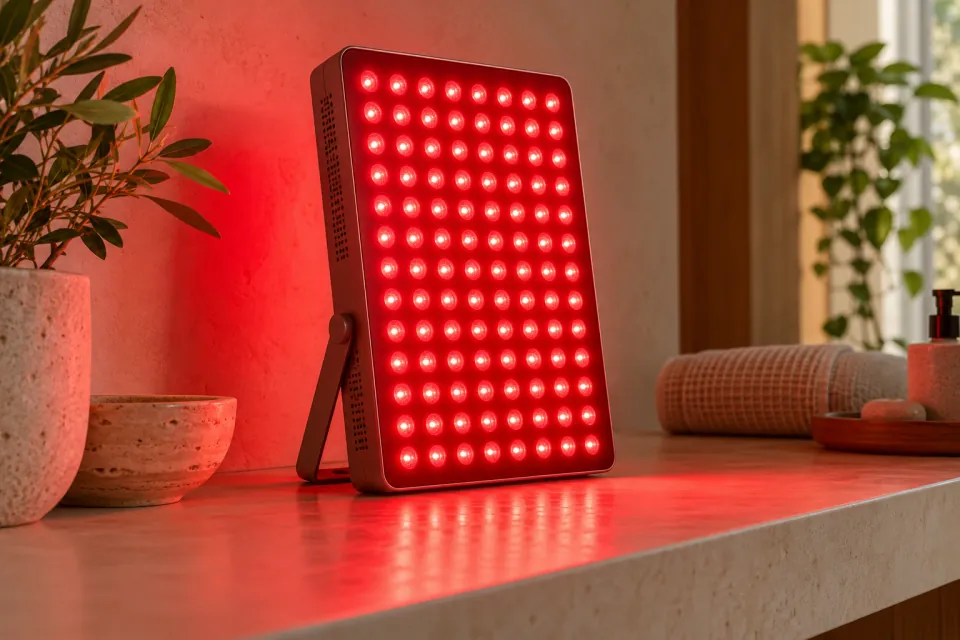
Use red-light therapy

Use a red or near-infrared light device for a specific, evidence-informed purpose, following the device instructions and relevant clinical advice.

At a glance

  • What we know: Some specific clinical uses of photobiomodulation have evidence, but effects depend on the condition and device protocol; broad wellness benefits are unproven.
  • What’s uncertain: Evidence for specific medical conditions and device protocols does not establish broad benefits from a consumer wellness routine.
  • First step: Define the specific outcome you want to address before buying or using a device.
  • Before you try it: Avoid direct exposure to the eyes and use eye protection when the device instructions call for it. All precautions

Takeaway

Photobiomodulation research covers many conditions and uses different wavelengths, doses, and devices. An umbrella review found moderate-certainty benefits for a few specific outcomes, while most other outcomes had low or very low certainty. Exercise-recovery reviews also report variable results and no reliable improvement in strength or functional capacity. Evidence for one medical indication should not be generalized to a consumer red-light routine for overall health.

Long-term healthVaries · Easy · High
Reviewed Sep 22, 2026
Save

Scientific evidence

What the research shows

Outcome assessments based on research, including its uncertainties and limitations.

No outcome assessment published

This entry is an overview. Its background references do not establish whether the practice works.

What people say

Who discusses this?

Public statements, with positions specific to each source and topic. These views do not determine the scientific evidence assessment.

What the research shows ↑

Practical steps and precautions

How to try it

  1. Define the specific outcome you want to address before buying or using a device.
  2. Check whether that use has clinical evidence and whether the device matches the studied wavelength, power, and treatment schedule.
  3. Follow device safety instructions and seek clinical guidance for a diagnosed condition rather than delaying established treatment.

Precautions

  • Avoid direct exposure to the eyes and use eye protection when the device instructions call for it.
  • Check with a clinician before use over a tumor, during pregnancy, or if you take light-sensitizing medication; safety depends on the device and treatment area.

References

Background and safety references

These support context and precautions; they are separate from assessed outcome sources.

Effects of photobiomodulation on multiple health outcomes: an umbrella review of randomized clinical trials

Son Y, Lee H, Yu S, et al. · Systematic Reviews · 2025

Umbrella review of meta-analyses of randomized controlled trials across health conditionsVerified from abstractBackground or safety reference
Open original source

Effects of photobiomodulation therapy on the functional performance of healthy individuals: a systematic review with meta-analysis

Bezerra LO, de Macedo LES, da Silva MLA, et al. · Lasers in Medical Science · 2023

Systematic review and meta-analysis of randomized photobiomodulation trials in healthy individualsVerified from abstractBackground or safety reference
Open original source

Photobiomodulation therapy for the improvement of muscular performance and reduction of muscular fatigue associated with exercise in healthy people: a systematic review and meta-analysis

Vanin AA, Verhagen E, Barboza SD, et al. · Lasers in Medical Science · 2018

Systematic review and meta-analysis of randomized trials in healthy people exercisingVerified from abstractBackground or safety reference
Open original source

Community

Discussion

Have you tried this? What helped or made it difficult?

Reader experiences are separate from the scientific evidence. Explore all discussions

No discussions yet.

Be the first to ask a question or share your experience.

Sign in to vote or join the discussion.

Explore other habits in a shared category. Each has its own evidence and precautions.

Editorial history and review method

Revision 3 · Approved for publication · Codex (publication approval explicitly authorized by site owner; category migration)

Prepared and checked with AI. Publication approval does not imply independent expert review. Request a correction.

Adds red-light/photobiomodulation as a Basic entry with only source-backed context and no general efficacy verdict. Recheck the scope against the specific conditions, distinguish consumer devices from studied protocols, and confirm safety wording. Europe PMC lookup returned empty results in this runtime, so source facts were checked against retrieved PubMed or journal records; recheck the source metadata and access status before approval. Publication release 2026-10-04: site owner authorized a bounded AI audit and release of this exact revision. See docs/release-audit-2026-10-04.md for source-check findings and limits. No independent health-professional or peer review is claimed. Category migration 2026-10-04: removed the separate goals field; categories: Long-term health → Long-term health. Research assessments, sources, guidance, precautions, and evidence review dates are unchanged. This revision awaits publication approval; no new evidence review is claimed. Publication approval 2026-10-04: site owner explicitly accepted all current category-migration revisions for deployment and requested that remaining limitations be retained in docs/content-review-backlog.md. Approval applies to this exact content revision. No new evidence review, independent expert review, or clinical validation is claimed; existing precautions and disclosures remain in effect.