Skip to content
Back to results

Prefer whole fruit to fruit juice

Eating fruit in its intact form — fresh, frozen or dried — instead of drinking the equivalent as juice, including 100 percent pressed juice with no added sugar.

At a glance

  • Evidence: Every three servings a week of whole fruit was associated with 2 percent lower type 2 diabetes risk, while the same increment of fruit juice was associated with 8 percent higher risk.Incident type 2 diabetes · Moderate certainty · Observational association
  • What’s uncertain: The evidence is observational and the contrast between forms is not randomised, so people who drink juice rather than eat fruit differ in weight, activity and overall diet in ways that adjustment may not fully capture.
  • First step: Eat the fruit rather than drinking it where you have the choice: a whole orange or apple in place of a glass of the same juice, which is the comparison the cohort and feeding studies actually used.
  • Before you try it: This is not a reason to avoid fruit. All precautions
Read the full takeaway

Cohort findings

The cohort evidence favours the whole fruit. In 3.46 million person-years of follow-up across the Nurses' Health Study, Nurses' Health Study II and the Health Professionals Follow-Up Study, every three servings a week of total whole fruit was associated with 2 percent lower type 2 diabetes risk, while the same increment of fruit juice was associated with 8 percent higher risk, and individual whole fruits ranged from 26 percent lower risk for blueberries to 10 percent higher risk for cantaloupe.

Feeding studies

Randomised crossover feeding studies explain a plausible mechanism: at matched weight, energy and energy density, whole apple increased fullness and cut lunch energy intake by 15 percent relative to no preload, and adding fibre back to juice did not restore that effect.

Limits of the comparison

But the honest reading is narrower than the headline. A pooled analysis of four cohorts found no association between 100 percent fruit juice and diabetes, and the largest synthesis of juice trials found no weight gain when juice calories were matched against a control.

Practical conclusion

The defensible claim is that juice is not a free substitute for fruit, not that juice is harmful.

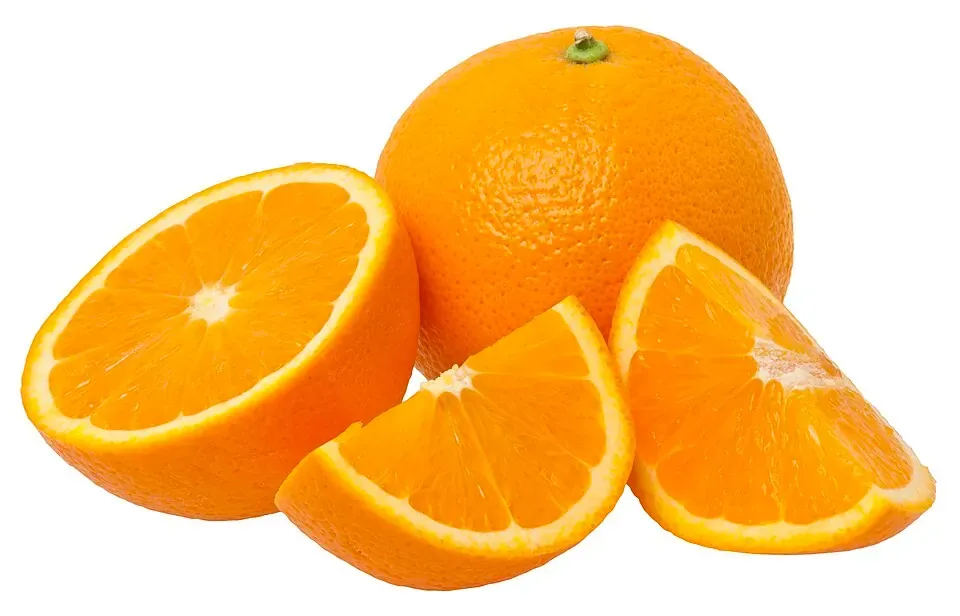
Whole oranges and orange pieces
NutritionLong-term healthUnder 10 min · Easy · Low
Reviewed Sep 23, 2026
Save

Scientific evidence

What the research shows

Outcome assessments based on research, including its uncertainties and limitations.

Incident type 2 diabetes

Finding: Benefit supportedCertainty: Moderatestudies found a benefit from doing this

Evidence basis: observational studies (association, not proof of cause)

Every three servings a week of whole fruit was associated with 2 percent lower type 2 diabetes risk, while the same increment of fruit juice was associated with 8 percent higher risk.

Population: Adults free of major chronic disease at baseline in three US health-professional cohorts (187,382 participants, 3,464,641 person-years, 12,198 incident type 2 diabetes cases) plus 23 prospective cohorts in the dose-response synthesis.

Research details

Summary

In three prospective US cohorts — 66,105 women from the Nurses' Health Study, 85,104 women from Nurses' Health Study II and 36,173 men from the Health Professionals Follow-Up Study, contributing 3,464,641 person-years and 12,198 incident type 2 diabetes cases — the pooled hazard ratio per three servings a week was 0.98 (95% CI 0.97 to 0.99) for total whole fruit consumption and 1.08 (95% CI 1.05 to 1.11) for the same increment of fruit juice. With mutual adjustment, individual whole fruits ranged from 0.74 (95% CI 0.66 to 0.83) for blueberries, 0.88 (95% CI 0.83 to 0.93) for grapes and raisins and 0.93 (95% CI 0.90 to 0.96) for apples and pears, to 1.10 (95% CI 1.02 to 1.18) for cantaloupe, and the associations differed significantly between individual fruits. A separate dose-response synthesis of 23 cohorts reported a summary relative risk for type 2 diabetes of 0.93 (95% CI 0.90 to 0.97) for high versus low fruit intake and inverse associations for apples, apples and pears, blueberries, grapefruit and grapes and raisins, with positive associations for fruit juice and fruit drinks.

Why this certainty

Rated Moderate. Three large cohorts with repeated dietary measures produce a precise, mutually adjusted contrast in the same participants using the same increment, which is a stronger design than comparing separate studies of fruit and juice, and an independent synthesis of 23 cohorts reproduces both the inverse fruit association and the positive juice association. Certainty is held below Strong because the design is still observational, the whole-fruit effect size is very small, the form contrast is partly explained by ascertainment bias in the wider literature, and one pooled analysis of the same question found the juice association to be null.

Limitations

The evidence is observational and the contrast between forms is not randomised, so people who drink juice rather than eat fruit differ in weight, activity and overall diet in ways that adjustment may not fully capture. Fruit juice is also easy to misreport, and the cohorts measured diet by food-frequency questionnaire, so some juice may be recorded as fruit or vice versa. The 2 percent difference per three weekly servings of whole fruit is small in absolute terms, and the direction was not uniform across fruits — cantaloupe was associated with higher risk. A pooled analysis of four cohorts found no association between 100 percent fruit juice and diabetes (RR 1.03; 95% CI 0.91 to 1.18), and a broader analysis of 17 cohorts found that the fruit juice association became non-significant in studies that ascertained type 2 diabetes objectively, which is the strongest argument that part of this signal is measurement artefact rather than effect. The same pooled analysis of four cohorts found sugar-sweetened fruit juice significantly associated with higher type 2 diabetes risk (RR 1.28, 95% CI 1.04 to 1.59, p = 0.02), so the null result applies to 100 percent juice without added sugar rather than to fruit drinks in general.

Effect estimate

Type 2 diabetes hazard ratio 0.98 (95% CI 0.97 to 0.99) per three servings a week of whole fruit versus 1.08 (95% CI 1.05 to 1.11) for the same increment of fruit juice.

Body weight and short-term energy intake

Finding: Mixed evidenceCertainty: Limitedstudies disagree, or the effect depends on who is studied

Evidence basis: randomised trials

Whole apple increased fullness and cut lunch energy intake by 15 percent, but a meta-analysis of juice trials found no weight difference when calories were matched and a children's cohort linked juice to BMI gain.

Population: 58 adults in a five-week randomised crossover preload study; 17 cohorts of 45,851 children and 25 adult studies (6 cohorts and 19 randomised trials) involving 268,095 adults in the meta-analysis; and 64 children aged 4 to 6 in a later crossover study of apple form.

Research details

Summary

In a randomised crossover study, 58 adults consumed 266 g (125 kcal) preloads of apple, applesauce, or apple juice with and without added fibre, matched for weight, energy content, energy density and ingestion rate, followed by an ad libitum test meal 15 minutes later. Eating apple reduced lunch energy intake (preload plus test meal) by 15 percent, or 187 plus or minus 36 kcal, compared with no preload, and reduced energy intake relative to applesauce and both juices; fullness ratings were highest for apple, and adding naturally occurring levels of fibre to juice did not enhance satiety. A systematic review and meta-analysis of 42 studies found that each additional daily serving of 100 percent fruit juice was associated with a 0.03 (95% CI 0.01 to 0.05) higher BMI change in children across 17 cohorts, while in adults the association with weight gain appeared only in studies that did not adjust for energy intake (0.21 kg; 95% CI 0.15 to 0.27 kg) and reversed when energy was accounted for (-0.08 kg; 95% CI -0.11 to -0.05 kg), and 19 randomised trials comparing juice with noncaloric controls showed no significant weight difference, with a wide confidence interval (mean difference -0.53 kg; 95% CI -1.55 to 0.48), and the same review concluded that its findings support guidance to limit fruit juice to prevent excess calorie intake and weight gain.

Why this certainty

Rated Limited. There is genuine randomised evidence with matched preloads on the acute satiety mechanism, which is a strength, and the direction of the children's cohort association is consistent with it. Certainty is held at Limited because the trial evidence addresses single-meal energy intake and not body weight, the calorie-matched juice trials are null, the adult weight association disappears once energy intake is accounted for, and an independent children's study found no difference in satiety between solid fruit and juice.

Limitations

The satiety findings come from single-meal laboratory studies, which measure preload plus test-meal intake over a few hours and cannot show whether the compensation persists, so a 15 percent reduction at one lunch is not evidence of weight change over time. The children's BMI association rests on cohort data without any randomised trial in children at all. The adult meta-analysis found the weight signal only in studies that failed to adjust for total energy, which suggests the apparent effect is mediated by calories rather than by juice as such, and the trials that matched calories found nothing. A later crossover study in 64 children found that when visual cues were masked and eating rate controlled, apple slices, purée and juice produced similar satiety, which directly contradicts the adult satiety result and suggests the earlier findings may depend on how the fruit is presented rather than on the food form itself. The later crossover study in children also found a sex-specific result, with boys compensating for about 99 percent of the energy in an apple-slice preload and girls for about 125 percent (p < 0.05), so the satiety findings are not uniform across the sample.

Effect estimate

Lunch energy intake reduced by 15 percent (187 plus or minus 36 kcal) after an apple preload compared with no preload in 58 adults; each additional daily serving of 100 percent fruit juice associated with 0.03 higher BMI change (95% CI 0.01 to 0.05) in children. Pooled randomised trials in adults (19 trials): mean difference -0.53 kg (95% CI -1.55 to 0.48) for juice versus noncaloric controls.

What people say

Who discusses this?

Public statements, with positions specific to each source and topic. These views do not determine the scientific evidence assessment.

What the research shows ↑

No sourced public statements added for this habit yet. This does not mean no one discusses it.

Practical steps and precautions

How to try it

  1. Eat the fruit rather than drinking it where you have the choice: a whole orange or apple in place of a glass of the same juice, which is the comparison the cohort and feeding studies actually used.
  2. If you drink juice, keep it to a small glass and treat it as a portion of free sugars rather than as a serving of fruit, since the associations with type 2 diabetes appear at ordinary intakes rather than only at extreme ones.
  3. Keep whole fruit visible and available — a bowl on the counter, fruit in the bag you take to work — because the swap is easiest to sustain when the intact form is the convenient one.
  4. Count dried fruit as fruit but watch the portion, since drying concentrates the sugars and the energy per handful; the cohort evidence for specific fruits covers fresh forms such as blueberries, grapes and apples.

Precautions

  • This is not a reason to avoid fruit. Whole fruit intake was inversely associated with type 2 diabetes risk in the same cohorts, and any advice that reduces total fruit intake would work against the existing fruit-and-vegetable evidence in this catalogue.
  • People who have difficulty chewing or swallowing, or who are undernourished, may get useful energy and micronutrients from juice that they cannot get from whole fruit; clinical advice should take precedence over this habit.
  • Juice is a concentrated sugar source for dental health. Frequent sipping through the day keeps teeth exposed to sugar and acid, whether or not the juice is unsweetened or 'no added sugar'.
  • Do not apply the diabetes associations to people who already have type 2 diabetes as if they were demonstrated for blood glucose control. The retrieved evidence concerns the incidence of diabetes in people free of it at baseline, not management of existing disease.

References

Fruit consumption and risk of type 2 diabetes: results from three prospective longitudinal cohort studies.

Muraki I, Imamura F, Manson JE, Hu FB, Willett WC, van Dam RM, Sun Q · BMJ (Clinical research ed.) · 2013

Prospective longitudinal cohort study in three cohorts with pooled analysisVerified from full text
Open original source

Consumption of sugar sweetened beverages, artificially sweetened beverages, and fruit juice and incidence of type 2 diabetes: systematic review, meta-analysis, and estimation of population attributable fraction

Imamura F, O'Connor L, Ye Z, Mursu J, Hayashino Y, Bhupathiraju SN, Forouhi NG · BMJ · 2015

Systematic review and meta-analysis of prospective cohort studies with population attributable fraction estimationVerified from abstract
Open original source

Intake of fruit juice and incidence of type 2 diabetes: a systematic review and meta-analysis.

Xi B, Li S, Liu Z, Tian H, Yin X, Huai P, Tang W, Zhou D, Steffen LM · PloS one · 2014

Systematic review and meta-analysis of prospective cohort studiesVerified from full text
Open original source

Fruit and vegetable consumption and the risk of type 2 diabetes: a systematic review and dose-response meta-analysis of prospective studies.

Halvorsen RE, Elvestad M, Molin M, Aune D · BMJ nutrition, prevention & health · 2021

Systematic review and dose-response meta-analysis of prospective cohort studiesVerified from full text
Open original source

The effect of fruit in different forms on energy intake and satiety at a meal.

Flood-Obbagy JE, Rolls BJ · Appetite · 2009

Randomised crossover preload study with ad libitum test mealVerified from full text
Open original source

Consumption of 100% Fruit Juice and Body Weight in Children and Adults: A Systematic Review and Meta-Analysis.

Nguyen M, Jarvis SE, Chiavaroli L, Mejia SB, Zurbau A, Khan TA, Tobias DK, Willett WC, Hu FB, Hanley AJ, Birken CS, Sievenpiper JL, Malik VS · JAMA pediatrics · 2024

Systematic review and meta-analysis of prospective cohort studies and randomised clinical trialsVerified from full text
Open original source

Effects of apple form on satiety in 4-6 year-old children: possible evidence of sex differences.

Reigh NA, Rolls BJ, Baney BA, Francis LA, Buss KA, Hayes JE, Hetherington MM, Moding K, Kling SMR, Keller KL · Appetite · 2026

Randomised crossover preload study in childrenVerified from full text
Open original source

Community

Discussion

Have you tried this? What helped or made it difficult?

Reader experiences are separate from the scientific evidence. Explore all discussions

No discussions yet.

Be the first to ask a question or share your experience.

Sign in to vote or join the discussion.

Explore other habits in a shared category. Each has its own evidence and precautions.

Editorial history and review method

Revision 3 · Approved for publication · Codex (publication approval explicitly authorized by site owner; category migration)

Prepared and checked with AI. Publication approval does not imply independent expert review. Request a correction.

Card summary corrected from 'found no weight benefit' to the actual null-with-wide-CI finding (mean difference -0.53 kg, 95% CI -1.55 to 0.48) and 'the same cohorts' changed to 'four cohorts'. body-weight-and-energy-intake summary now carries the randomised-trial confidence interval and the review's own conclusion supporting guidance to limit juice; limitations add the Reigh 2026 sex-specific compensation result; effectEstimate adds the pooled adult randomised-trial estimate. incident-type-2-diabetes limitations add Xi 2014's sugar-sweetened fruit juice result (RR 1.28, 95% CI 1.04 to 1.59). Second reviewer must re-check: (a) whether the four cohorts in Xi 2014 overlap Muraki 2013's three, which the retrieved abstract does not state; (b) whether Moderate certainty for incident-type-2-diabetes survives the loss of significance under objective ascertainment; (c) whether D'Elia 2021 should be cited, since its inverse juice findings were retrieved and deliberately left out. Publication release 2026-10-04: site owner authorized a bounded AI audit and release of this exact revision. See docs/release-audit-2026-10-04.md for source-check findings and limits. No independent health-professional or peer review is claimed. Category migration 2026-10-04: removed the separate goals field; categories: Nutrition, Long-term health → Nutrition, Long-term health. Research assessments, sources, guidance, precautions, and evidence review dates are unchanged. This revision awaits publication approval; no new evidence review is claimed. Publication approval 2026-10-04: site owner explicitly accepted all current category-migration revisions for deployment and requested that remaining limitations be retained in docs/content-review-backlog.md. Approval applies to this exact content revision. No new evidence review, independent expert review, or clinical validation is claimed; existing precautions and disclosures remain in effect.