
Skip to content
Back to results

Eat a handful of nuts most days

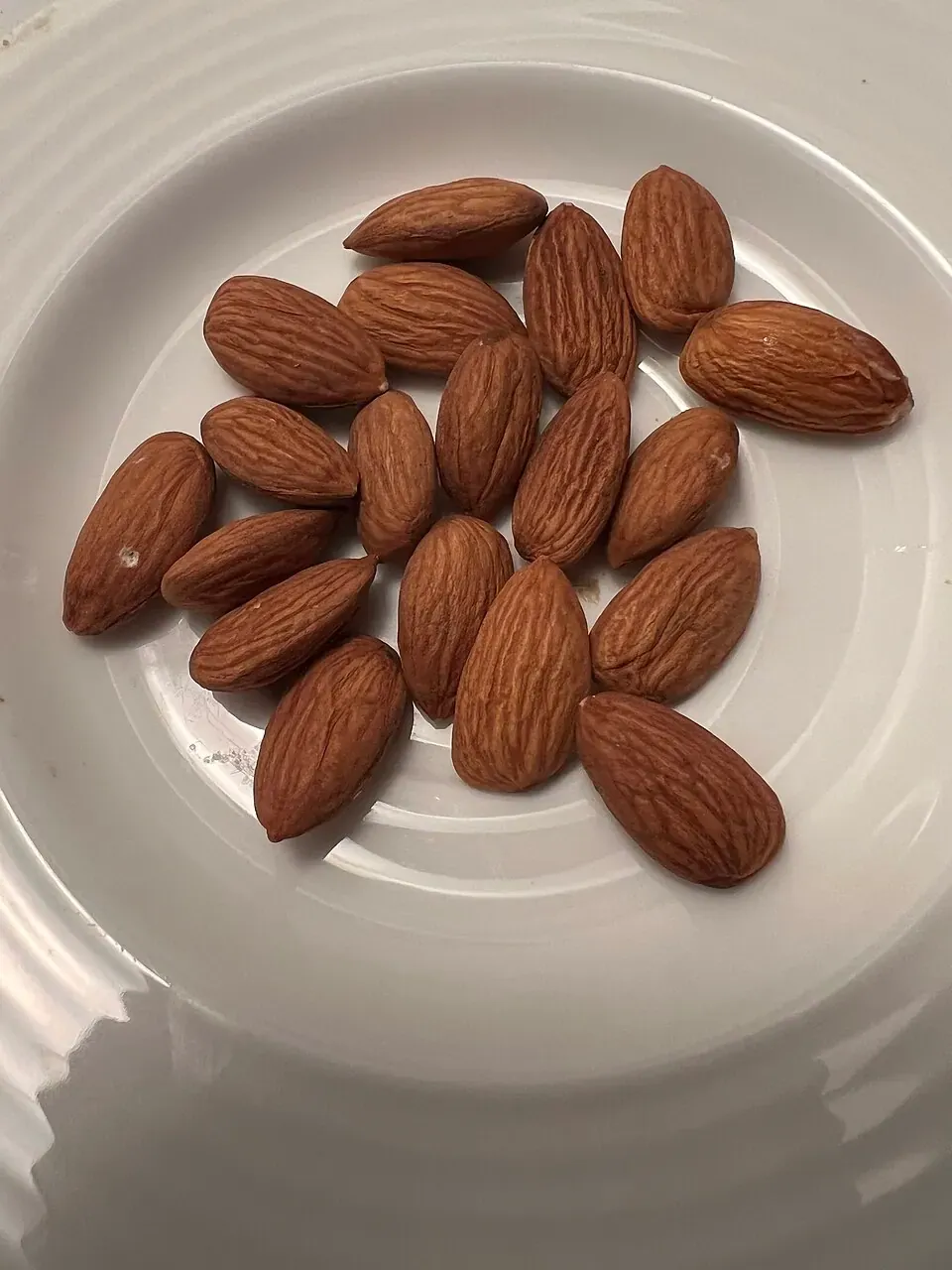
The person eats roughly one handful (about 28 g) of unsalted tree nuts or peanuts on most days, usually as a replacement for a less healthful snack rather than as an addition to the diet.

At a glance

  • Evidence: Pooled cohorts associate a daily handful of nuts with roughly 14-29% lower cardiovascular disease and coronary heart disease risk.Cardiovascular disease events and cardiovascular mortality · Moderate certainty · Observational association
  • What’s uncertain: Disease findings are observational; nut eaters differ in other health behaviours that statistical adjustment may not fully account for.
  • First step: About 28 g, or a handful, on most days is an editorial reference from cohort data rather than a proven individual dose.
  • Before you try it: Nut allergy is the main genuine risk: tree nut and peanut allergy can be severe, and nuts should be avoided entirely by anyone with a diagnosed allergy. All precautions
Read the full takeaway

Weight and cohort findings

Two things about nuts are well evidenced. First, randomised trials settle the weight worry: across 86 trials with 5,873 participants there was no adverse effect of nuts on body weight (MD 0.09 kg, 95% CI -0.09 to 0.27 kg), graded high certainty, and a network meta-analysis of 105 trials found no increase in any adiposity measure except waist circumference with hazelnut-enriched diets. Second, large pooled cohorts consistently associate higher nut intake with lower cardiovascular disease and lower all-cause mortality, with the most recent synthesis of 33 publications reporting a relative risk of 0.86 (95% CI 0.82-0.91) for cardiovascular disease and 0.77 (95% CI 0.73-0.81) for all-cause mortality for highest versus lowest intake.

Clinical outcomes

Where the evidence stops is the clinical question: those disease findings remain observational, and a Cochrane review of randomised trials found no trial that reported cardiovascular clinical events at all, while pooled trial evidence for type 2 diabetes is null with very low certainty. Eating nuts is a well-tolerated, weight-neutral swap; calling it proven prevention would go beyond the data.

NutritionLong-term healthUnder 10 min · Easy · Low
Reviewed Sep 23, 2026
Save

Scientific evidence

What the research shows

Outcome assessments based on research, including its uncertainties and limitations.

Cardiovascular disease events and cardiovascular mortality

Finding: Benefit supportedCertainty: Moderatestudies found a benefit from doing this

Evidence basis: observational studies (association, not proof of cause)

Pooled cohorts associate a daily handful of nuts with roughly 14-29% lower cardiovascular disease and coronary heart disease risk.

Population: Adults in prospective cohort studies contributing to pooled analyses: 33 publications covering 63 studies in the most recent synthesis, 20 prospective studies with 29 publications in an earlier pooling, and 19 studies in the GRADE-assessed meta-analysis.

Research details

Summary

The most recent dose-response synthesis included 33 publications covering 63 studies and found that the highest versus lowest nut intake was associated with a relative risk of 0.81 (95% CI 0.75-0.87) for coronary heart disease, 0.86 (95% CI 0.82-0.91) for cardiovascular disease, 0.91 (95% CI 0.84-0.99) for stroke and 0.74 (95% CI 0.70-0.78) for cardiovascular mortality. An earlier pooling of 20 prospective studies (29 publications) found a summary relative risk per 28 g per day of nut intake of 0.71 (95% CI 0.63-0.80) for coronary heart disease and 0.79 (95% CI 0.70-0.88) for cardiovascular disease. A GRADE-assessed meta-analysis of 19 prospective cohorts reported an inverse association between total nut consumption and cardiovascular disease incidence (RR 0.85, 95% CI 0.80-0.91, I2 0%) and cardiovascular disease mortality (RR 0.77, 95% CI 0.72-0.82, I2 3%), but graded the certainty of the evidence as ranging from moderate to very low. None of this evidence tests whether starting to eat nuts prevents cardiovascular events.

Why this certainty

Rated Moderate. The association is replicated across several independent pooled analyses with narrow confidence intervals, dose-response gradients, and low heterogeneity for cardiovascular disease incidence (I2 0%) and cardiovascular disease mortality (I2 3%) in the GRADE-assessed review, although heterogeneity was substantial for coronary heart disease incidence (I2 74%), which is stronger than most single-food evidence. It is not rated Strong because every disease estimate is observational, the only formal certainty grading available spans moderate to very low, and the randomised evidence is limited to risk factors and lipids rather than events — so the association is credible but the causal effect of the habit remains unmeasured.

Limitations

All of the disease estimates come from observational cohorts, where nut eaters differ systematically from non-eaters in ways that are hard to adjust away — the source reviews note that nut consumption clusters with lower body mass index, less smoking and higher intake of fruit and vegetables. The GRADE-assessed meta-analysis rated the certainty of its own estimates as ranging from moderate to very low, and heterogeneity was substantial for coronary heart disease incidence (I2 74%). A Cochrane review of randomised trials searching specifically for cardiovascular clinical events found that none of the five eligible trials reported them, so the causal question has never been tested directly.

Effect estimate

Highest versus lowest nut intake: cardiovascular disease RR 0.86 (95% CI 0.82-0.91), cardiovascular mortality RR 0.74 (95% CI 0.70-0.78) across 33 publications and 63 studies.

All-cause mortality

Finding: Benefit supportedCertainty: Moderatestudies found a benefit from doing this

Evidence basis: observational studies (association, not proof of cause)

Pooled cohorts associate roughly 8% lower all-cause mortality per 28 g of weekly nut intake and roughly 22% lower per 28 g of daily nut intake, in two different meta-analyses.

Population: Adults in prospective cohort studies: 33 publications covering 63 studies in the most recent synthesis, 20 prospective studies with 29 publications in the earlier dose-response pooling, and seven studies with 354,933 participants and 44,636 cumulative incident deaths in an earlier meta-analysis.

Research details

Summary

The most recent meta-analysis of 33 publications (63 studies) reported a relative risk of 0.77 (95% CI 0.73-0.81) for all-cause mortality comparing the highest with the lowest nut intake, and 0.92 (95% CI 0.90-0.94) per 28 g increase in weekly nut intake. An earlier systematic review and dose-response meta-analysis of 20 prospective studies found a summary relative risk per 28 g per day of nut intake of 0.78 (95% CI 0.72-0.84, I2 66%) for all-cause mortality, with similar results for tree nuts and peanuts, and estimated that 4.4 million premature deaths in the America, Europe, Southeast Asia and Western Pacific would be attributable to nut intake below 20 g per day in 2013 if the associations were causal. A meta-analysis of seven studies with 354,933 participants and 44,636 deaths found that one serving of nuts per day was associated with a relative risk of 0.73 (95% CI 0.60-0.88) for all-cause mortality, while cautioning explicitly that confounding factors should be taken into account.

Why this certainty

Rated Moderate rather than Strong. The direction and approximate magnitude replicate across independent meta-analyses, the participant numbers are very large, and the dose-response gradient is present per 28 g increment, all of which argue against chance. Certainty is capped because a large observational dataset alone does not establish causation: nut eaters differ systematically from non-eaters, the pooled heterogeneity is substantial, and the only way the causal claim could be upgraded — a randomised trial with mortality as the outcome — does not exist.

Limitations

The mortality association is observational and the source syntheses state the confounding concern directly — one of them documents that nut consumption is associated with lower body mass index, less smoking and higher intakes of fruit, vegetables and alcohol, which is a pattern of generally healthier behaviour rather than an isolated dietary habit. Heterogeneity was substantial (I2 66% in the dose-response pooling), so the pooled estimate averages over populations with different nut types, quantities and background diets. The attributable-burden figure of 4.4 million premature deaths is explicitly conditional on the associations being causal, and no randomised trial has tested mortality as an outcome.

Effect estimate

All-cause mortality per 28 g/day nut intake: RR 0.78 (95% CI 0.72-0.84); highest versus lowest intake: RR 0.77 (95% CI 0.73-0.81).

Body weight and adiposity (the weight-gain worry)

Finding: Little/no effectCertainty: Strongstudies found little or no effect

Evidence basis: randomised trials

Across 86 randomised trials with 5,873 participants, nuts had no adverse effect on body weight (MD 0.09 kg, 95% CI -0.09 to 0.27).

Population: Adults in randomised controlled trials and prospective cohorts: 86 randomised controlled trials with 5,873 participants plus six prospective cohort studies with 569,910 participants in the primary synthesis, 105 randomised controlled trials with 6,768 participants measured for body weight in the network meta-analysis, and 15 trials with 899 participants with type 2 diabetes in a condition-specific meta-analysis.

Research details

Summary

The most directly relevant synthesis pooled six prospective cohort studies (seven unique cohorts, n = 569,910) and 86 randomised controlled trials (114 comparisons, n = 5,873) and found that nuts were associated with lower incidence of overweight or obesity in cohorts (RR 0.93, 95% CI 0.88-0.98) while trials showed no adverse effect of nuts on body weight (mean difference 0.09 kg, 95% CI -0.09 to 0.27 kg), with certainty graded high for the trial estimate and moderate for the cohort estimate; meta-regression found that higher nut intake was associated with reductions in body weight and body fat. A network meta-analysis of 105 randomised controlled trials found no significant increase in body weight, body mass index, waist circumference or body fat percentage with nut consumption versus control, with the single exception of hazelnut-enriched diets raising waist circumference, and almond-enriched diets reduced waist circumference. A separate meta-analysis of 15 trials in 899 people with type 2 diabetes found no effect of nut-enriched interventions on body weight (p-ES -0.04, 95% CI -0.16 to 0.08), body mass index, waist circumference or body fat percentage, and a systematic review of metabolizable energy found the measured energy content of nuts was consistently lower than predicted by Atwater factors, which offers a mechanism for the weight-neutrality. The metabolizable-energy review did not consider the digestibility of carbohydrate and protein, which limits how far the measured-energy mechanism can be taken.

Why this certainty

Rated Strong, which is unusual for a nutrition habit, because this is the one question here answered by randomised evidence rather than cohorts: 86 trials with 5,873 participants showed no adverse effect on body weight with a confidence interval that excludes any clinically meaningful gain, and the formal certainty grading for that estimate was high. The rating applies narrowly to the weight-gain question and not to disease outcomes. It is held at Strong rather than raised, and the disease outcomes in this habit are deliberately kept at Moderate, because trials were short and the cohort half of the same paper carries a lower certainty grade.

Limitations

The trial evidence is short-term relative to the timescale over which people worry about weight gain, and the high-certainty rating applies to the absence of a short-term adverse effect rather than to decades of daily intake. The cohort estimate of lower overweight and obesity incidence cannot be read causally, because nut intake tracks with healthier behaviours. Heterogeneity in the network meta-analysis was such that only the hazelnut finding for waist circumference was significant, and the metabolizable-energy review noted that variation in methods between studies weakened its evidence base and that carbohydrate and protein digestibility were not considered.

Effect estimate

Body weight, nuts versus control in 86 randomised controlled trials: mean difference 0.09 kg (95% CI -0.09 to 0.27 kg).

Incident type 2 diabetes in relation to total nut intake

Finding: Insufficient direct evidenceCertainty: Very limitedthis has not been directly tested

Evidence basis: observational studies (association, not proof of cause)

Pooling found no association between nut intake and type 2 diabetes, but certainty is very low and three of eight studies were cross-sectional, so this is an evidence gap.

Population: Adults in observational studies: eight studies (five prospective, three cross-sectional) in the most recent meta-analysis, nine prospective cohorts in an earlier meta-analysis, and 31 reports from 18 prospective studies with 12,655 type 2 diabetes cases in the earliest pooling.

Research details

Summary

The most recent meta-analysis of eight studies (five prospective and three cross-sectional) found that comparisons of the highest with the lowest categories of total nut consumption showed a nonsignificant association with type 2 diabetes, and that there was no evidence of a linear or nonlinear dose-response gradient for total nut and peanut consumption in prospective cohort studies; the certainty of the evidence using NutriGrade was very low for all exposures. Only peanut butter was inversely associated with type 2 diabetes incidence (RR 0.87, 95% CI 0.77, 0.98). An earlier meta-analysis of nine prospective cohorts similarly found no association between nut consumption and type 2 diabetes (SRR 0.98, 95% CI 0.84-1.15), reaching the same null conclusion in dose-response analysis. An earlier pooling had reported an inverse association for type 2 diabetes that disappeared after adjustment for body mass index (RR 1.03, 95% CI 0.91-1.16 without a significant result), which suggests the crude signal was carried by body weight rather than by nuts.

Why this certainty

Rated Very limited, and the finding is recorded as Insufficient direct evidence rather than Little/no effect, because a synthesis that grades certainty very low for every exposure and draws three of its eight studies from cross-sectional designs cannot establish that nuts have no effect. The earlier inverse association did not survive adjustment for body mass index, no dose-response gradient is present, the only positive result is for peanut butter, and the formal certainty grade is very low. This outcome is included specifically so the entry does not imply a diabetes benefit that the data do not support.

Limitations

Total nut intake showed no dose-response gradient, which is a substantive argument against a real effect rather than merely an underpowered one. The most recent review graded its certainty as very low for every exposure, and the cross-sectional component cannot establish temporality. An earlier inverse association was attenuated to the null after adjustment for body mass index, so part of the apparent protection in older analyses was attributable to nut eaters being leaner. Peanut butter being the only exposure associated with lower risk is a heterogeneous result that may reflect residual confounding or the food matrix rather than a nut effect.

Effect estimate

Total nut consumption, highest versus lowest category, and type 2 diabetes: nonsignificant in the most recent meta-analysis of eight studies, with NutriGrade certainty very low; an earlier pooling reported SRR 0.98 (95% CI 0.84-1.15).

What people say

Who discusses this?

Public statements, with positions specific to each source and topic. These views do not determine the scientific evidence assessment.

What the research shows ↑

Practical steps and precautions

How to try it

  1. Aim for about 28 g (one handful) on most days, which is the increment used in the Aune 2016 and Luo 2014 dose-response analyses and the amount described as one handful daily in the cohort literature; the 2026 synthesis reports its dose-response per 28 g per week instead.
  2. Use nuts as a replacement rather than an addition, but treat that as a practical suggestion rather than a tested protocol: the trial evidence concerns nut-enriched or nut-provision diets compared with control diets, and the cohort evidence concerns habitual nut intake, so no retrieved study randomised people to substitute nuts for a specific snack.
  3. Choose unsalted, unroasted or dry-roasted nuts; the trials and cohorts studied whole nuts, and physical form matters because ground nut flour releases more fat than whole nuts.
  4. Keep a portion in a fixed container or pre-portioned bag rather than eating from a large bag, which keeps the habit at one handful rather than several.

Precautions

  • Nut allergy is the main genuine risk: tree nut and peanut allergy can be severe, and nuts should be avoided entirely by anyone with a diagnosed allergy.
  • Nuts are energy-dense, so if intake is added on top of an unchanged diet rather than substituted, the weight-neutrality findings from substitution trials do not automatically apply.
  • Whole nuts are a choking hazard for young children, who need age-appropriate forms rather than whole nuts.
  • Nut butters and flavoured or salted nut snacks are not equivalent to plain nuts — the type 2 diabetes meta-analysis found peanut butter associated with lower risk while peanuts and tree nuts were not, and the trials used plain nuts.

References

Nut consumption and risk of cardiovascular disease events and all-cause mortality: A systematic review and dose-response meta-analysis of prospective cohort studies.

Liu M, Wang M, Fu X, He X, Wang M, Su Y, Liu G, Hu F, Zhang M, Zhao Y, Hu D · Archives of cardiovascular diseases · 2026

Systematic review and dose-response meta-analysis of prospective cohort studies with NutriGrade assessmentVerified from abstract
Open original source

Nut consumption and risk of cardiovascular disease, total cancer, all-cause and cause-specific mortality: a systematic review and dose-response meta-analysis of prospective studies.

Aune D, Keum N, Giovannucci E, Fadnes LT, Boffetta P, Greenwood DC, Tonstad S, Vatten LJ, Riboli E, Norat T · BMC medicine · 2016

Systematic review and dose-response meta-analysis of prospective cohort studiesVerified from full text
Open original source

Nut consumption and incidence of cardiovascular diseases and cardiovascular disease mortality: a meta-analysis of prospective cohort studies.

Becerra-Tomas N, Paz-Graniel I, W C Kendall C, Kahleova H, Rahelic D, Sievenpiper JL, Salas-Salvado J · Nutrition reviews · 2019

Systematic review and meta-analysis of prospective cohort studies with GRADE assessmentVerified from full text
Open original source

Nut consumption on all-cause, cardiovascular, and cancer mortality risk: a systematic review and meta-analysis of epidemiologic studies.

Grosso G, Yang J, Marventano S, Micek A, Galvano F, Kales SN · The American journal of clinical nutrition · 2015

Systematic review and dose-response meta-analysis of prospective studiesVerified from abstract
Open original source

Are fatty nuts a weighty concern? A systematic review and meta-analysis and dose-response meta-regression of prospective cohorts and randomized controlled trials.

Nishi SK, Viguiliouk E, Blanco Mejia S, Kendall CWC, Bazinet RP, Hanley AJ, Comelli EM, Salas Salvado J, Jenkins DJA, Sievenpiper JL · Obesity reviews : an official journal of the International Association for the Study of Obesity · 2021

Systematic review and dose-response meta-analysis of prospective cohorts and randomised controlled trialsVerified from full text
Open original source

The Relationship of Tree Nuts and Peanuts with Adiposity Parameters: A Systematic Review and Network Meta-Analysis.

Fernandez-Rodriguez R, Mesas AE, Garrido-Miguel M, Martinez-Ortega IA, Jimenez-Lopez E, Martinez-Vizcaino V · Nutrients · 2021

Systematic review and network meta-analysis of randomised controlled trialsVerified from full text
Open original source

Nut consumption, body weight, and adiposity in patients with type 2 diabetes: a systematic review and meta-analysis of randomized controlled trials.

Fernandez-Rodriguez R, Martinez-Vizcaino V, Garrido-Miguel M, Martinez-Ortega IA, Alvarez-Bueno C, Eumann Mesas A · Nutrition reviews · 2022

Systematic review and meta-analysis of randomised controlled trialsVerified from abstract
Open original source

The Metabolizable Energy and Lipid Bioaccessibility of Tree Nuts and Peanuts: A Systematic Review with Narrative Synthesis of Human and In Vitro Studies.

Nikodijevic CJ, Probst YC, Tan SY, Neale EP · Advances in nutrition (Bethesda, Md.) · 2023

Systematic review with narrative synthesis of human and in vitro studiesVerified from full text
Open original source

Nut consumption and type 2 diabetes risk: a systematic review and meta-analysis of observational studies.

Becerra-Tomas N, Paz-Graniel I, Hernandez-Alonso P, Jenkins DJA, Kendall CWC, Sievenpiper JL, Salas-Salvado J · The American journal of clinical nutrition · 2021

Systematic review and meta-analysis of prospective and cross-sectional observational studies with NutriGrade assessmentVerified from abstract
Open original source

Meta-analysis of prospective studies on the effects of nut consumption on hypertension and type 2 diabetes mellitus.

Guo K, Zhou Z, Jiang Y, Li W, Li Y · Journal of diabetes · 2015

Meta-analysis of prospective cohort studiesVerified from abstract
Open original source

Nut consumption and risk of type 2 diabetes, cardiovascular disease, and all-cause mortality: a systematic review and meta-analysis.

Luo C, Zhang Y, Ding Y, Shan Z, Chen S, Yu M, Hu FB, Liu L · The American journal of clinical nutrition · 2014

Systematic review and meta-analysis of prospective cohort studiesVerified from abstract
Open original source

Nut consumption for the primary prevention of cardiovascular disease.

Martin N, Germano R, Hartley L, Adler AJ, Rees K · The Cochrane database of systematic reviews · 2015

Cochrane systematic review of randomised controlled trialsVerified from full text
Open original source

Community

Discussion

Have you tried this? What helped or made it difficult?

Reader experiences are separate from the scientific evidence. Explore all discussions

No discussions yet.

Be the first to ask a question or share your experience.

Sign in to vote or join the discussion.

Explore other habits in a shared category. Each has its own evidence and precautions.

Editorial history and review method

Revision 8 · Approved for publication · Codex (publication approval explicitly authorized by site owner; category migration)

Prepared and checked with AI. Publication approval does not imply independent expert review. Request a correction.

Applied the group-3 audit. type-2-diabetes-incidence is relabelled Little/no effect -> Insufficient direct evidence, because the source grades certainty very low for every exposure and three of its eight included studies were cross-sectional, so it cannot establish equivalence; the headline and certaintyRationale are rewritten to match. all-cause-mortality's headline no longer presents 8-22% as one range: it now names the metrics (8% per 28 g of weekly intake, 22% per 28 g of daily intake, two different meta-analyses). Implementation step 1 no longer implies every dose-response analysis uses 28 g/day, and step 2 replaces the unsupported substitution claim with an explicit statement that the trial evidence concerns nut-enriched or nut-provision diets and that no retrieved study randomised substitution for a specific snack. cardiovascular-disease-events.certaintyRationale now reports I2 = 0% for incidence and 3% for mortality alongside I2 = 74% for coronary heart disease incidence, so it no longer contradicts the limitations field. The Nikodijevic carbohydrate and protein digestibility caveat was added to the weight summary. Second reviewer must re-check: (a) whether martin-2015-cochrane-cvd remains the right anchor now that newer randomised syntheses may exist, since the audit did not search for them; (b) whether Strong is acceptable on weight-and-adiposity while the same paper's cohort half is only moderate; (c) the pre-existing truncation of other headlines in this catalogue, which was left alone. Outcome-label disambiguation: the outcome is now titled 'Incident type 2 diabetes in relation to total nut intake'. The integrity checker keys a cross-entry direction comparison on the first four words of an outcome label, so three entries assessing different exposures against diabetes were being compared as if they were the same question. The findings themselves are unchanged and still reflect their own sources. Publication release 2026-10-04: site owner authorized a bounded AI audit and release of this exact revision. See docs/release-audit-2026-10-04.md for source-check findings and limits. No independent health-professional or peer review is claimed. Category migration 2026-10-04: removed the separate goals field; categories: Nutrition, Long-term health → Nutrition, Long-term health. Research assessments, sources, guidance, precautions, and evidence review dates are unchanged. This revision awaits publication approval; no new evidence review is claimed. Publication approval 2026-10-04: site owner explicitly accepted all current category-migration revisions for deployment and requested that remaining limitations be retained in docs/content-review-backlog.md. Approval applies to this exact content revision. No new evidence review, independent expert review, or clinical validation is claimed; existing precautions and disclosures remain in effect.