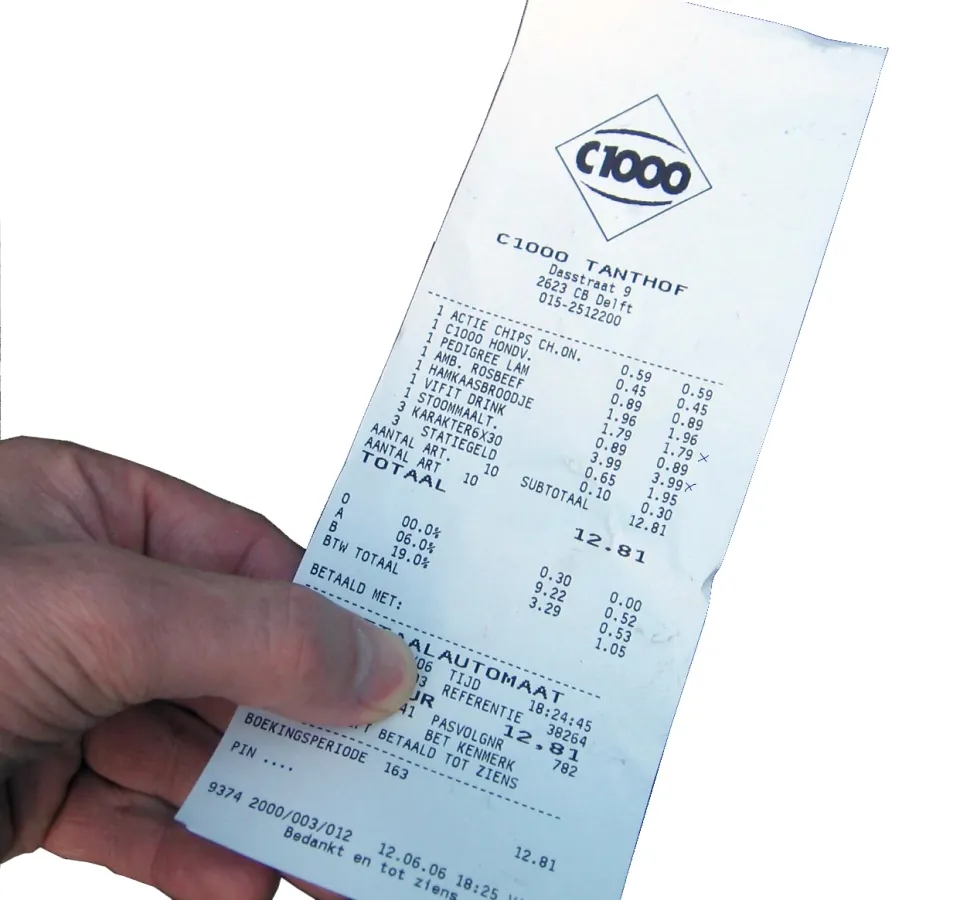

Bisphenol exposure from receipt handling
Evidence basis: indirect evidence, not a direct test of this exact habit
Reducing thermal-paper contact may lower receipt-related bisphenol exposure.
Population: Female cashiers in seven Korean retail shops, plus small experimental adult samples handling BPA-containing thermal receipts.
Research details
Summary
In 54 female cashiers, urinary BPA approximately doubled after shifts during a week without gloves but did not change during the following week with gloves. A separate experiment found BPA transfer from receipts to hands and food after use of one sanitizer formulation. A review describes skin transfer and replacement developers such as BPS, but notes uncertainty about how much receipts contribute to total exposure. These studies support reducing unnecessary contact indirectly; none tested choosing digital receipts or demonstrated a clinical health benefit.
Why this certainty
Limited certainty reflects exposure biomarkers, small studies and indirect testing of the proposed habit. The insulin-resistance association in cashiers cannot establish that avoiding receipts prevents metabolic disease.
Limitations
The cashier comparison used a fixed sequence rather than randomization. The sanitizer experiment combined skin and food exposure under particular conditions. Receipt formulations and background exposures vary; older BPA results cannot be applied to every current receipt or replacement developer.
Effect estimate
Cashier study: about a twofold post-shift urinary BPA increase without gloves; no change during the glove week.
- Bisphenol A exposure through receipt handling and its association with insulin resistance among female cashiers.
- Holding thermal receipt paper and eating food after using hand sanitizer results in high serum bioactive and urine total levels of bisphenol A (BPA).
- Bisphenol A and replacements in thermal paper: A review.