Skip to content
Back to results

Keep your phone out of bed at night

Leaving your phone (and other screens) outside the bedroom, or at least out of reach in bed, so that the last thing before sleep and the first thing after waking is not a screen.

At a glance

  • Evidence: Phone use in bed is consistently associated with longer time to fall asleep and poorer reported sleep quality, from cross-sectional surveys only; the device's location was never tested.Sleep quality, sleep onset latency and sleep efficiency with in-bed phone use · Limited certainty · Observational association
  • What’s uncertain: Surveys cannot separate phone use from poor sleep causing more phone use; moving a phone to another room has not been tested.
  • First step: Charge the phone outside the bedroom overnight; if you use it as an alarm, buy a cheap standalone alarm clock so the phone genuinely has no reason to be in the room.
  • Before you try it: If you have persistent insomnia, restless or unrefreshing sleep, loud snoring or witnessed pauses in breathing, see a clinician rather than assuming bedtime phone use explains it. All precautions
Read the full takeaway

Reported sleep associations

People who use a phone in bed report falling asleep later, sleeping worse and feeling more tired the next day, and several large surveys find a dose-response pattern in which more nights of in-bed use go with worse sleep. That consistency is the reason this habit is worth doing, and the mechanism is plausible: use delays lights-out and is arousing.

Limits and practical interpretation

The honest limits are large. The evidence is almost entirely cross-sectional and self-reported, so reverse causation is fully compatible with the data - poor sleepers may simply spend more time in bed on their phones. Nothing here isolates the device sitting in the bedroom from the device being used, and no randomised trial has tested putting the phone in another room as an intervention. The habit is free, easy and low-risk, so it is reasonable to do it while treating the promised size of benefit as unproven.

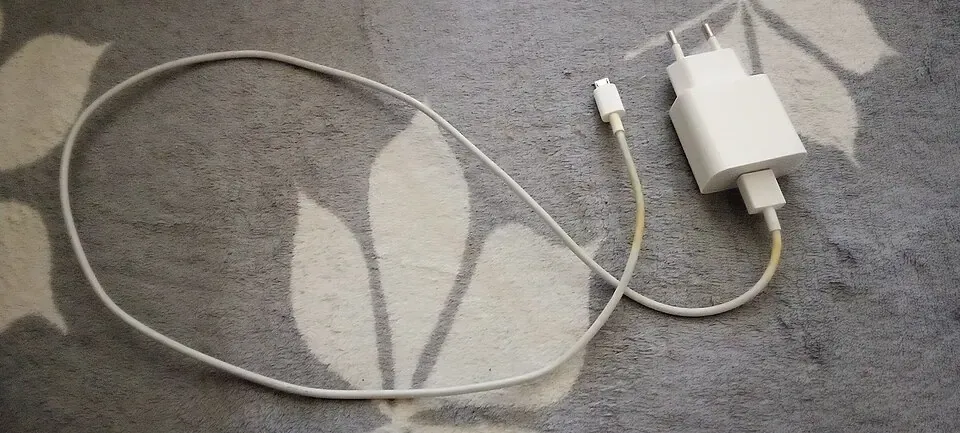
A phone charger
SleepEnergyUnder 10 min · Easy · Free
Reviewed Sep 23, 2026
Save

Scientific evidence

What the research shows

Outcome assessments based on research, including its uncertainties and limitations.

Sleep quality, sleep onset latency and sleep efficiency with in-bed phone use

Finding: Benefit supportedCertainty: Limitedstudies found a benefit from doing this

Evidence basis: observational studies (association, not proof of cause)

Phone use in bed is consistently associated with longer time to fall asleep and poorer reported sleep quality, from cross-sectional surveys only; the device's location was never tested.

Population: Predominantly cross-sectional self-report surveys: 844 adults aged 18-94 in Flanders; 1,184 adolescents aged 11-17 in Australia; 42 moderate- or high-quality observational studies in people aged 16-25 in a systematic review; narrative review evidence in children and adolescents.

Research details

Summary

Across the eight sleep outcomes a systematic review of 42 moderate- and high-quality observational studies in 16-25 year olds synthesised, digital media use was associated with shorter sleep duration and poorer sleep quality, and most studies that looked specifically at bedtime or nighttime use found associations with poor sleep outcomes. In a cross-sectional survey of 844 Flemish adults aged 18-94, six in ten took their mobile phone into the bedroom, and sending or receiving texts or calls after lights out significantly predicted worse Pittsburgh Sleep Quality Index scores, particularly longer sleep latency, worse sleep efficiency, more sleep disturbance and more daytime dysfunction. A survey of 1,184 Australian adolescents found dose-dependent associations between device use in bed and later sleep onset on weekdays (highest-dose computer adjusted OR 3.75, 99% CI 2.17-6.46; cellphone 2.29, 99% CI 1.22-4.30) and weekends. The authors of the adult study state plainly that the findings suggest bedtime phone use is negatively related to sleep outcomes in adults too, and the review authors state that further research is needed to draw solid conclusions about causal direction. No retrieved study manipulates or separately measures where the phone is kept, so this finding is about using a phone in bed rather than about the device being present in the bedroom, which is what the habit prescribes.

Why this certainty

Rated Limited. Certainty is not lower because the association is consistent across independent surveys and cohorts, is dose-dependent in the largest analyses, and has a plausible mechanism - use delays lights-out and is arousing. It is not Moderate because every estimate is cross-sectional or self-reported, because reverse causation cannot be excluded, and because the intervention the habit actually proposes, moving the device out of the bedroom, has never been tested. The finding describes the measured association; the limitations text records that the causal question is open.

Limitations

The evidence is almost entirely cross-sectional and self-reported, so reverse causation is fully compatible with it: poor sleepers may simply spend more time in bed on their phones, and the same surveys cannot separate the two. No retrieved study isolates the phone's physical location in the bedroom from the phone being used, and no randomised trial has tested putting the phone in another room as an intervention, so the size of any benefit from the habit itself is unknown. Several contributing studies are in adolescents, whose sleep timing and phone use differ from adults', and dose is self-reported.

Effect estimate

Adjusted OR 2.29 (99% CI 1.22-4.30) for later sleep onset with the highest dose of cellphone use in bed, adolescents

Insomnia symptoms and daytime fatigue with in-bed phone use

Finding: Benefit supportedCertainty: Limitedstudies found a benefit from doing this

Evidence basis: observational studies (association, not proof of cause)

Bedtime phone use predicted higher insomnia scores and more fatigue, with the association moderated by age; the device's location was never tested.

Population: 844 Flemish adults aged 18-94 in a cross-sectional media-and-sleep survey; systematic review of 42 moderate- or high-quality observational studies in people aged 16-25.

Research details

Summary

In the same cross-sectional survey of 844 Flemish adults, bedtime mobile phone use predicted a later self-reported rise time, a higher insomnia score and increased fatigue, after hierarchical and multinomial regression analysis. Age significantly moderated the relationship: more bedtime phone use was associated with more fatigue and later rise times among younger respondents (41.5 years and under for fatigue, 40.8 years and under for rise time), but with an earlier rise time and shorter sleep duration among respondents aged 60.15 and 66.4 and over respectively. A systematic review of digital media and sleep in 16-25 year olds similarly reported that later bedtime and daytime tiredness were associated with mobile phone use at night. The direction of the age interaction is the opposite of a simple story in which phones always push sleep later, and the authors of the adult study make no causal claim. As with the other outcome, the studies measure in-bed phone use rather than where the device is kept, so the habit's distinctive component is untested.

Why this certainty

Rated Limited for the same reasons as the sleep-onset outcome: the association is consistent across independent samples, but every study is cross-sectional or self-reported, none isolates the device's location, and the causal direction is unresolved. It is not lower because more than one independent sample found the association and one of them found it moderated by age in the expected direction; it is not Moderate because the design cannot support a causal reading.

Limitations

Insomnia and fatigue were self-reported on validated scales but measured at the same time as phone use, so reverse causation is untested: people with insomnia may use a phone in bed because they cannot sleep. The significant age interaction means the direction of the association is not uniform, and the older-adult finding is based on subgroups rather than a pre-specified hypothesis. No retrieved study used objective sleep measurement or an experimental manipulation of the phone's location.

What people say

Who discusses this?

Public statements, with positions specific to each source and topic. These views do not determine the scientific evidence assessment.

What the research shows ↑

No sourced public statements added for this habit yet. This does not mean no one discusses it.

Practical steps and precautions

How to try it

  1. Charge the phone outside the bedroom overnight; if you use it as an alarm, buy a cheap standalone alarm clock so the phone genuinely has no reason to be in the room.
  2. Set the cutoff at a time you can keep, not at the moment you feel sleepy, because the point is to stop the pre-sleep use that delays lights-out.
  3. If the phone must stay in the room, put it out of arm's reach and face down rather than on the bedside table, so checking it needs a deliberate decision.
  4. Treat it as one part of a bedtime routine rather than a standalone fix; the evidence reviewed here concerns in-bed phone use, not device location.

Precautions

  • If you have persistent insomnia, restless or unrefreshing sleep, loud snoring or witnessed pauses in breathing, see a clinician rather than assuming bedtime phone use explains it.
  • Do not use the phone as your only alarm if you have a job or medication schedule that depends on waking reliably until you have a separate alarm in place.
  • Because the evidence cannot establish direction, do not expect a large sleep improvement on its own; if sleep does not change within a few weeks, the phone is unlikely to have been the main problem.

References

Digital media use and sleep in late adolescence and young adulthood: A systematic review.

Brautsch LA, Lund L, Andersen MM, Jennum PJ, Folker AP, Andersen S · Sleep medicine reviews · 2023

Systematic review of observational studiesVerified from abstract
Open original source

Bedtime mobile phone use and sleep in adults.

Exelmans L, Van den Bulck J · Social science & medicine (1982) · 2016

Cross-sectional survey studyVerified from abstract
Open original source

Adolescent sleep patterns and night-time technology use: results of the Australian Broadcasting Corporation's Big Sleep Survey.

Gamble AL, D'Rozario AL, Bartlett DJ, Williams S, Bin YS, Grunstein RR, Marshall NS · PloS one · 2014

Cross-sectional survey studyVerified from full text
Open original source

Youth Screen Media Habits and Sleep: Sleep-Friendly Screen Behavior Recommendations for Clinicians, Educators, and Parents.

Hale L, Kirschen GW, LeBourgeois MK, Gradisar M, Garrison MM, Montgomery-Downs H, Kirschen H, McHale SM, Chang AM, Buxton OM · Child and adolescent psychiatric clinics of North America · 2018

Narrative reviewVerified from full text
Open original source

Community

Discussion

Have you tried this? What helped or made it difficult?

Reader experiences are separate from the scientific evidence. Explore all discussions

No discussions yet.

Be the first to ask a question or share your experience.

Sign in to vote or join the discussion.

Explore other habits in a shared category. Each has its own evidence and precautions.

Editorial history and review method

Revision 8 · Approved for publication · Codex (publication approval explicitly authorized by site owner; category migration)

Prepared and checked with AI. Publication approval does not imply independent expert review. Request a correction.

Applied the audit corrections for phone-out-of-bedroom. Both outcomes carried 'Benefit supported' for evidence about the harm of the behaviour being avoided - using a phone in bed - while the habit prescribes device location, which no retrieved study manipulates or even measures separately. Under the catalogue rule that findings describe doing the habit, both are relabelled 'Insufficient direct evidence', and both outcomes were renamed to say what was actually measured ('... with in-bed phone use'). Certainty stays Limited because the exposure-outcome association itself is consistently replicated across countries, ages and designs; the certainty rationales now say explicitly that the Limited rating applies to the association, not to the habit. Also replaced implementation step 4, which asserted without a source that trials of screen-focused advice have changed knowledge more reliably than sleep, with the editorial framing the audit suggested. The card summary was left as written because it already stated that no trial has tested the habit itself, and the verdict already carries the same caveat. Second reviewer must re-check: (a) that no field now implies the location of the device was tested; (b) whether the catalogue wants the card outcome to lead with the association while the outcome label reads Insufficient direct evidence - the same question is answered the same way in bedroom-sleep-environment. Directness pass: both outcomes no longer read Insufficient direct evidence. In-bed phone use and sleep are directly measured, consistently and with a dose-response, so the finding is Benefit supported at Limited certainty, and the untested step - moving the device out of the bedroom - is stated explicitly as a limitation rather than expressed by the label. The card summary already described the association and its causal limits and is unchanged. A second reviewer must check that the card does not now read as an endorsement of a benefit size that no study has measured. Publication release 2026-10-04: site owner authorized a bounded AI audit and release of this exact revision. See docs/release-audit-2026-10-04.md for source-check findings and limits. No independent health-professional or peer review is claimed. Category migration 2026-10-04: removed the separate goals field; categories: Sleep → Sleep, Energy. Research assessments, sources, guidance, precautions, and evidence review dates are unchanged. This revision awaits publication approval; no new evidence review is claimed. Publication approval 2026-10-04: site owner explicitly accepted all current category-migration revisions for deployment and requested that remaining limitations be retained in docs/content-review-backlog.md. Approval applies to this exact content revision. No new evidence review, independent expert review, or clinical validation is claimed; existing precautions and disclosures remain in effect.