Skip to content
Back to results

Prefer paper-filtered coffee when cholesterol matters

If you regularly drink unfiltered coffee, use a paper filter to reduce exposure to its cholesterol-raising compounds.

At a glance

  • Evidence: Paper filtering produces lower LDL than unfiltered boiled coffee in high-intake trials.Total and LDL cholesterol · Moderate certainty · Randomized intervention
  • What’s uncertain: These older trials mainly tested strong boiled coffee at high daily volumes, so the magnitude should not be assumed for one cup or every brewing method.
  • First step: If you drink boiled, Turkish-style or French-press coffee regularly, consider a paper-filter brewing method.
  • Before you try it: Coffee can still disturb sleep or cause unwanted stimulant effects after filtering; a paper filter does not remove caffeine. All precautions

Takeaway

Randomized comparisons found lower total and LDL cholesterol with paper-filtered rather than unfiltered boiled coffee. The studies mostly tested several cups daily, and paper filtering is not equivalent to a metal mesh. This is a brewing-method choice for existing coffee drinkers, not a reason to begin drinking coffee or a substitute for cholesterol treatment.

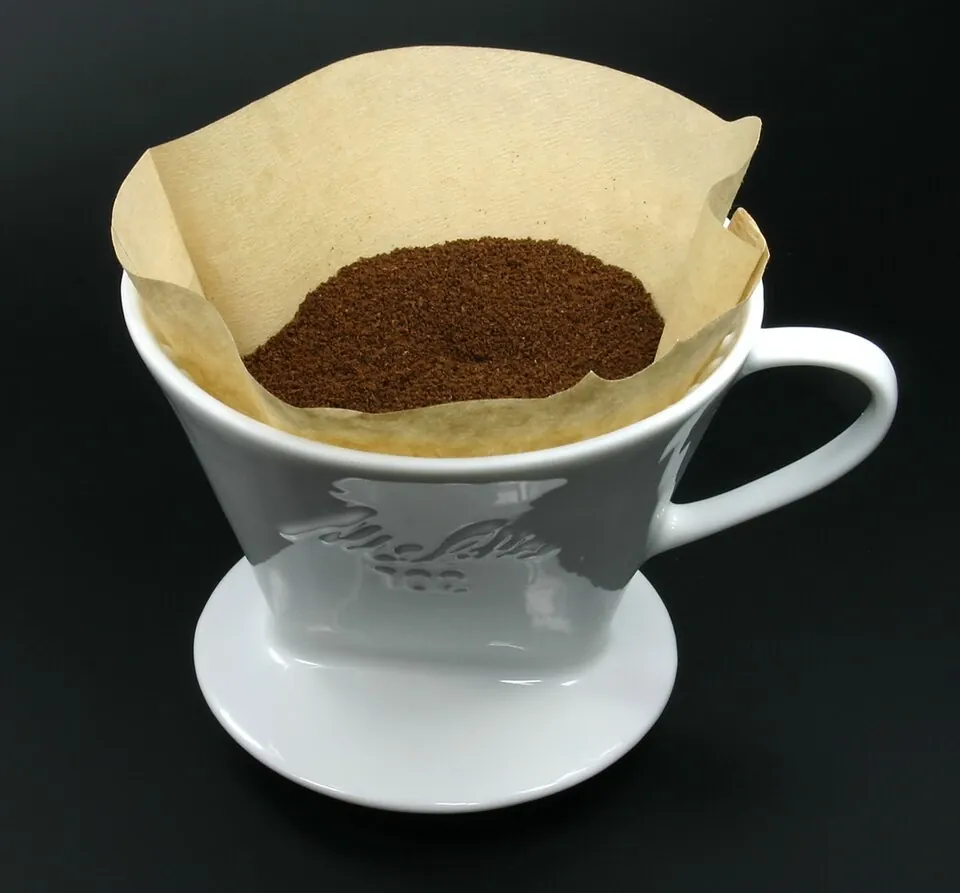
A paper filter in a coffee dripper
NutritionLong-term healthUnder 10 min · Easy · Low
Reviewed Sep 29, 2026
Save

Scientific evidence

What the research shows

Outcome assessments based on research, including its uncertainties and limitations.

Total and LDL cholesterol

Finding: Benefit supportedCertainty: Moderatestudies found a benefit from doing this

Evidence basis: randomised trials

Paper filtering produces lower LDL than unfiltered boiled coffee in high-intake trials.

Population: Healthy adults: 64 volunteers drinking six cups daily, 20 volunteers in four-week crossover periods, and 107 young adults in a 12-week trial.

Research details

Summary

A randomized trial in 64 healthy volunteers compared unfiltered boiled coffee with the same coffee passed through paper filters. Unfiltered coffee raised LDL by 0.41 mmol/L (95% CI 0.16 to 0.66) relative to filtered coffee. A 20-person randomized crossover also found higher total and LDL cholesterol with boiled coffee, and filtering removed more than 80% of its lipid-soluble material. In a separate 107-person trial the LDL difference was 0.39 mmol/L, but its confidence interval crossed the null (-0.04 to 0.82); filtered coffee did not significantly differ from no coffee.

Why this certainty

Moderate certainty reflects several direct randomized comparisons and a tested filtering mechanism. Certainty is limited by small samples, short follow-up and uncertainty about typical lower-volume consumption.

Limitations

These older trials mainly tested strong boiled coffee at high daily volumes, so the magnitude should not be assumed for one cup or every brewing method. The 107-person trial had an imprecise LDL estimate. Cholesterol is a risk factor; these trials did not measure heart attacks or mortality.

Effect estimate

Unfiltered minus paper-filtered LDL: +0.41 mmol/L (95% CI 0.16 to 0.66).

What people say

Who discusses this?

Public statements, with positions specific to each source and topic. These views do not determine the scientific evidence assessment.

What the research shows ↑

No sourced public statements added for this habit yet. This does not mean no one discusses it.

Practical steps and precautions

How to try it

  1. If you drink boiled, Turkish-style or French-press coffee regularly, consider a paper-filter brewing method.
  2. Use an actual paper filter; a metal mesh is not the intervention these trials tested.
  3. Keep your usual caffeine limits and timing, and discuss raised LDL with your clinician rather than relying on a brewing change alone.

Precautions

  • Coffee can still disturb sleep or cause unwanted stimulant effects after filtering; a paper filter does not remove caffeine.

References

Cholesterol-raising factor from boiled coffee does not pass a paper filter.

van Dusseldorp M, Katan MB, van Vliet T, Demacker PN, Stalenhoef AF. · Arteriosclerosis and thrombosis : a journal of vascular biology · 1991

Randomized trial in 64 healthy volunteersVerified from abstract
Open original source

The hypercholesterolaemic factor in boiled coffee is retained by a paper filter.

Ahola I, Jauhiainen M, Aro A. · Journal of internal medicine · 1991

Randomized crossover trial in 20 healthy volunteersVerified from abstract
Open original source

The effect on serum cholesterol levels of coffee brewed by filtering or boiling.

Bak AA, Grobbee DE. · The New England journal of medicine · 1989

Randomized trial in 107 young adultsVerified from abstract
Open original source

Community

Discussion

Have you tried this? What helped or made it difficult?

Reader experiences are separate from the scientific evidence. Explore all discussions

No discussions yet.

Be the first to ask a question or share your experience.

Sign in to vote or join the discussion.

Explore other habits in a shared category. Each has its own evidence and precautions.

Editorial history and review method

Revision 2 · Approved for publication · Codex (publication approval explicitly authorized by site owner; category migration)

Prepared and checked with AI. Publication approval does not imply independent expert review. Request a correction.

Added after overlap review on 2026-09-29. Retrieved original research metadata and abstracts; statements in videos remain separate from scientific evidence. Independent editorial approval remains pending. Recheck the narrow population and outcome framing, the effect direction, and all implementation advice before public approval. Publication release 2026-10-04: site owner authorized a bounded AI audit and release of this exact revision. See docs/release-audit-2026-10-04.md for source-check findings and limits. No independent health-professional or peer review is claimed. Category migration 2026-10-04: removed the separate goals field; categories: Nutrition, Long-term health → Nutrition, Long-term health. Research assessments, sources, guidance, precautions, and evidence review dates are unchanged. This revision awaits publication approval; no new evidence review is claimed. Publication approval 2026-10-04: site owner explicitly accepted all current category-migration revisions for deployment and requested that remaining limitations be retained in docs/content-review-backlog.md. Approval applies to this exact content revision. No new evidence review, independent expert review, or clinical validation is claimed; existing precautions and disclosures remain in effect.