
Skip to content
Back to results

Use HEPA filtration when indoor particle exposure matters

Run and maintain a room-sized HEPA air cleaner when traffic, smoke or other particle sources affect indoor air.

At a glance

  • Evidence: Filtration lowers indoor particles and may modestly lower systolic pressure in exposed adults.Indoor fine particles and blood pressure · Limited certainty · Randomized intervention
  • What’s uncertain: The synthesis includes portable cleaner technologies rather than only one HEPA model.
  • First step: First reduce indoor pollution sources and ventilate when the outdoor air is clean; filtration supplements these measures.
  • Before you try it: Avoid devices that intentionally produce ozone; ozone irritates the lungs. All precautions

Takeaway

Portable filtration trials substantially reduced indoor fine particles and found a small pooled systolic blood-pressure benefit. A 154-person HEPA trial near highways found benefit in participants starting with elevated systolic pressure, but not in those with normal pressure. Treat this as an environmental routine for relevant exposure, not a universal daily health requirement or proven disease-prevention treatment.

Long-term healthUnder 10 min · Easy · Moderate
Reviewed Sep 29, 2026
Save

Scientific evidence

What the research shows

Outcome assessments based on research, including its uncertainties and limitations.

Indoor fine particles and blood pressure

Finding: Benefit supportedCertainty: Limitedstudies found a benefit from doing this

Evidence basis: randomised trials

Filtration lowers indoor particles and may modestly lower systolic pressure in exposed adults.

Population: Approximately 880 participants across 17 filtration studies, plus 154 adults living adjacent to highways in one-month HEPA and sham periods.

Research details

Summary

A review of 17 true-versus-sham filtration studies enrolled approximately 880 people. Indoor particle removal averaged 59.8%, and systolic pressure was 2.35 mmHg lower (95% CI 0.2 to 4.5 lower); the diastolic estimate was not significant. In a randomized crossover trial of 154 adults living near highways, HEPA filtration reduced particles and yielded a net 3.0-mmHg systolic advantage in people starting at 120 mmHg or higher. There was no significant diastolic benefit or systolic benefit in participants below 120 mmHg.

Why this certainty

Limited certainty for blood-pressure benefit reflects randomized sham comparisons but short duration and context-dependent results. The particle reduction is more directly demonstrated than long-term health improvement.

Limitations

The synthesis includes portable cleaner technologies rather than only one HEPA model. Trials are short and vary in exposure and participant risk. The newer trial benefit was subgroup-dependent; most participants were of higher socioeconomic status. Clinical cardiovascular events were not measured.

Effect estimate

Pooled systolic BP: -2.35 mmHg (95% CI -4.5 to -0.2).

What people say

Who discusses this?

Public statements, with positions specific to each source and topic. These views do not determine the scientific evidence assessment.

What the research shows ↑

Practical steps and precautions

How to try it

  1. First reduce indoor pollution sources and ventilate when the outdoor air is clean; filtration supplements these measures.
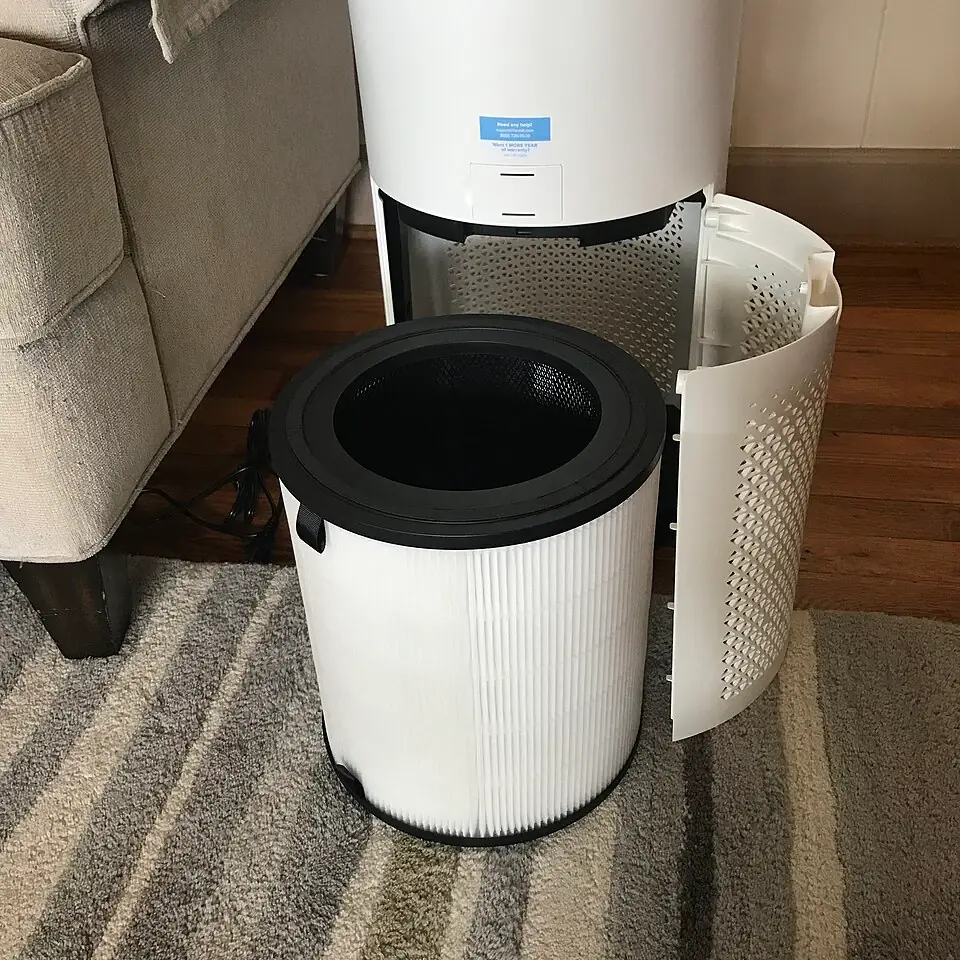
  2. Choose a HEPA unit with a clean air delivery rate appropriate for the entire room, using its sizing guidance.
  3. Place it where you spend time, keep airflow unobstructed, and use a tolerable fan speed that lets it run consistently.
  4. Replace filters as instructed and include electricity and replacement filters in the ongoing cost.

Precautions

  • Avoid devices that intentionally produce ozone; ozone irritates the lungs.
  • A particle filter does not remove all gases or solve damp, mould, or a carbon-monoxide hazard.
  • Continue blood-pressure care; an air purifier is not a replacement for treatment.

References

An updated systematic review and meta-analysis on portable air cleaners and blood pressure: Recommendations for users and manufacturers.

Faridi S, Allen RW, Brook RD, Yousefian F, Hassanvand MS, Carlsten C. · Ecotoxicology and environmental safety · 2023

Systematic review and meta-analysis of 17 true-versus-sham filtration studiesVerified from abstract
Open original source

Effect of HEPA Filtration Air Purifiers on Blood Pressure: A Pragmatic Randomized Crossover Trial.

Brugge D, Eliasziw M, Thanikachalam M, Kuchhal V, Morson C, Vazquez-Dodero T, Mertl A, Tallam P, Kunwar S, Sprague Martinez L, Rashid HS, Singh-Smith K, Gates H, Palma S, Goldstein-Gelb W, Ginzburg SL, Hersey SO, Majluf F, Zamore W. · Journal of the American College of Cardiology · 2025

Pragmatic randomized crossover trial in 154 adults living near highwaysVerified from full text
Open original source

Background and safety references

These support context and precautions; they are separate from assessed outcome sources.

Guide to Air Cleaners in the Home

US Environmental Protection Agency · US Environmental Protection Agency · 2018

Government reportInstitutional guidance; publisher page retrieved 2026-09-29Verified from full textBackground or safety reference
Open original source

Community

Discussion

Have you tried this? What helped or made it difficult?

Reader experiences are separate from the scientific evidence. Explore all discussions

No discussions yet.

Be the first to ask a question or share your experience.

Sign in to vote or join the discussion.

Explore other habits in a shared category. Each has its own evidence and precautions.

Editorial history and review method

Revision 2 · Approved for publication · Codex (publication approval explicitly authorized by site owner; category migration)

Prepared and checked with AI. Publication approval does not imply independent expert review. Request a correction.

Added after overlap review on 2026-09-29. Retrieved original research metadata and abstracts; statements in videos remain separate from scientific evidence. Independent editorial approval remains pending. Recheck the narrow population and outcome framing, the effect direction, and all implementation advice before public approval. Publication release 2026-10-04: site owner authorized a bounded AI audit and release of this exact revision. See docs/release-audit-2026-10-04.md for source-check findings and limits. No independent health-professional or peer review is claimed. Category migration 2026-10-04: removed the separate goals field; categories: Long-term health → Long-term health. Research assessments, sources, guidance, precautions, and evidence review dates are unchanged. This revision awaits publication approval; no new evidence review is claimed. Publication approval 2026-10-04: site owner explicitly accepted all current category-migration revisions for deployment and requested that remaining limitations be retained in docs/content-review-backlog.md. Approval applies to this exact content revision. No new evidence review, independent expert review, or clinical validation is claimed; existing precautions and disclosures remain in effect.