Skip to content
Back to results

Chew sugar-free gum after meals

Chew sugar-free gum for about 20 minutes after eating as an optional adjunct to routine tooth cleaning.

At a glance

  • What we know: Sugar-free gum may be a useful oral-care adjunct, but caries findings are tentative and it does not replace fluoride brushing or interdental cleaning.
  • What’s uncertain: Caries findings are tentative and studies vary; the evidence does not establish xylitol as the uniquely effective ingredient.
  • First step: If gum suits you, choose a sugar-free product and chew for about 20 minutes after a meal.
  • Before you try it: Do not use gum instead of fluoride toothpaste, brushing, or cleaning between teeth. All precautions

Takeaway

A systematic review of 12 studies found a tentative reduction in caries increment with sugar-free gum, but the studies varied and were generally moderate in quality. The American Dental Association describes it as a possible adjunct to twice-daily fluoride brushing and daily cleaning between teeth, not a replacement. The evidence does not justify treating xylitol as the uniquely effective ingredient.

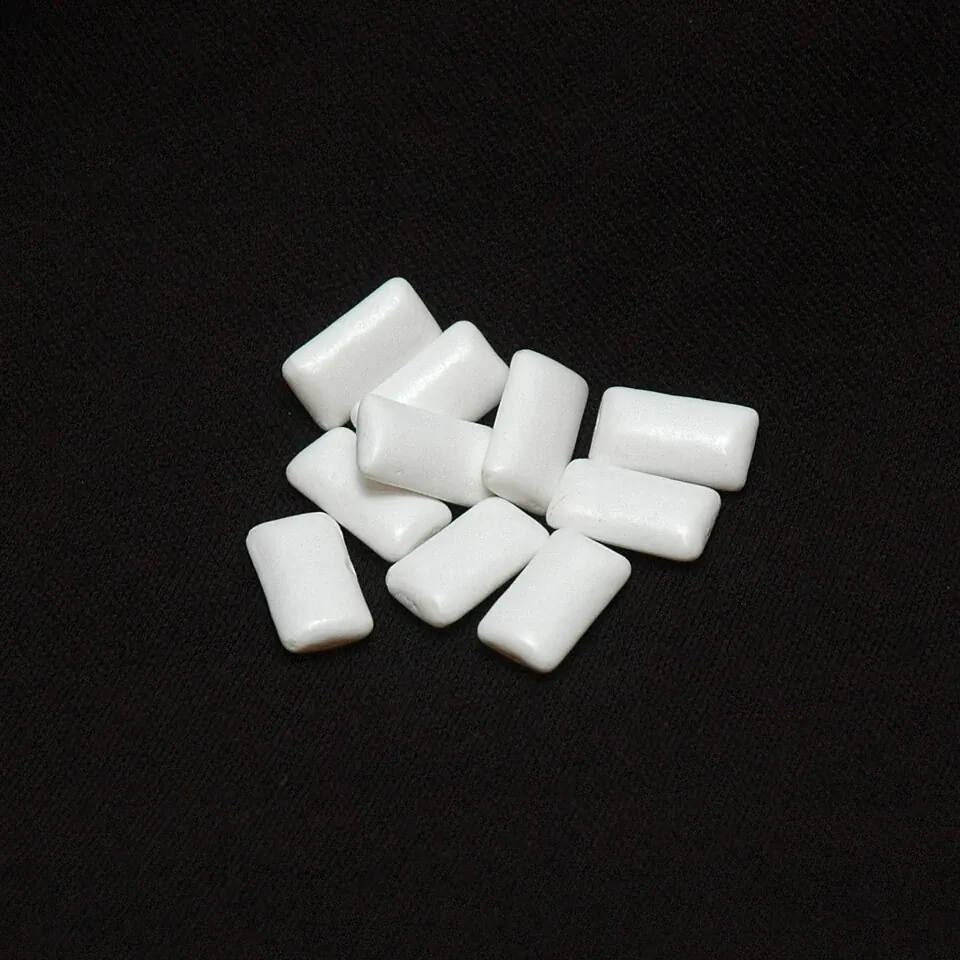
Pieces of sugar-free chewing gum
Long-term health20+ min · Easy · Low
Reviewed Sep 28, 2026
Save

Scientific evidence

What the research shows

Outcome assessments based on research, including its uncertainties and limitations.

No outcome assessment published

This entry is an overview. Its background references do not establish whether the practice works.

What people say

Who discusses this?

Public statements, with positions specific to each source and topic. These views do not determine the scientific evidence assessment.

What the research shows ↑

No sourced public statements added for this habit yet. This does not mean no one discusses it.

Practical steps and precautions

How to try it

  1. If gum suits you, choose a sugar-free product and chew for about 20 minutes after a meal.
  2. Use it only as an optional add-on to twice-daily fluoride-toothpaste brushing and daily cleaning between teeth.
  3. Do not assume a xylitol product is required; the gum’s chewing action and saliva stimulation are part of the proposed rationale.

Precautions

  • Do not use gum instead of fluoride toothpaste, brushing, or cleaning between teeth.
  • Stop if chewing aggravates jaw pain, and choose a product labelled sugar-free rather than one containing sugar.

References

Background and safety references

These support context and precautions; they are separate from assessed outcome sources.

A Systematic Review and Meta-Analysis of the Role of Sugar-Free Chewing Gum in Dental Caries

Newton JT, Awojobi O, Nasseripour M, Warburton F, Di Giorgio S, Gallagher JE, Banerjee A · JDR Clinical & Translational Research · 2020

Systematic reviewSystematic review and meta-analysis of sugar-free gum interventions with dental caries outcomes, verified against the PubMed abstract (PMID 31743654).Verified from abstractBackground or safety reference
Open original source

Chewing Gum

American Dental Association, Research Services and Scientific Information · American Dental Association · 2023

Organisational reportAmerican Dental Association Oral Health Topics informational summary, last updated 4 May 2023; not a new systematic review and the page states it is not official ADA policy.Verified from full textBackground or safety reference
Open original source

Community

Discussion

Have you tried this? What helped or made it difficult?

Reader experiences are separate from the scientific evidence. Explore all discussions

No discussions yet.

Be the first to ask a question or share your experience.

Sign in to vote or join the discussion.

Explore other habits in a shared category. Each has its own evidence and precautions.

Editorial history and review method

Revision 2 · Approved for publication · Codex (publication approval explicitly authorized by site owner; category migration)

Prepared and checked with AI. Publication approval does not imply independent expert review. Request a correction.

New Basic entry. Source metadata and quoted facts were checked against the listed abstract or organizational page. No outcome assessment is published; the text preserves the source's population, dose, and uncertainty limits. Independent approval remains pending. Publication release 2026-10-04: site owner authorized a bounded AI audit and release of this exact revision. See docs/release-audit-2026-10-04.md for source-check findings and limits. No independent health-professional or peer review is claimed. Category migration 2026-10-04: removed the separate goals field; categories: Long-term health → Long-term health. Research assessments, sources, guidance, precautions, and evidence review dates are unchanged. This revision awaits publication approval; no new evidence review is claimed. Publication approval 2026-10-04: site owner explicitly accepted all current category-migration revisions for deployment and requested that remaining limitations be retained in docs/content-review-backlog.md. Approval applies to this exact content revision. No new evidence review, independent expert review, or clinical validation is claimed; existing precautions and disclosures remain in effect.