Skip to content
Back to results

Protect your hearing in loud places

Carry and correctly use earplugs or earmuffs in loud settings, while lowering volume and moving away from noise when possible.

At a glance

  • Evidence: Earplugs reduced temporary hearing changes and new tinnitus after one loud festival.Temporary hearing changes and tinnitus after loud music · Limited certainty · Randomized intervention
  • What’s uncertain: The festival trial measured immediate effects; long-term prevention evidence is less certain.
  • First step: Carry suitable earplugs and fit them before entering a loud place.
  • Before you try it: Leave or reduce exposure if sound hurts or your ears ring; protection does not make unlimited noise safe. All precautions

Takeaway

A small randomized festival trial found fewer temporary hearing changes and less new tinnitus with earplugs. Correct insertion matters: workplace trials found better noise attenuation when users received fitting instructions. Protection is a sensible routine, but long-term hearing-loss prevention is less directly established by the intervention studies than the short-term effects. Combine earplugs with lower volume, distance from speakers and quieter breaks.

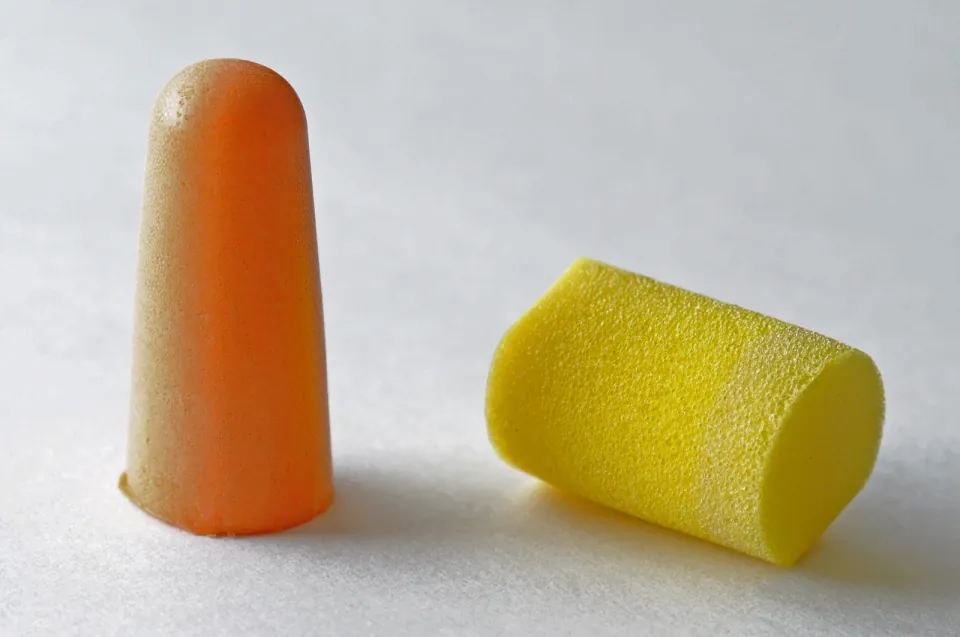
Orange and yellow foam earplugs for hearing protection
Long-term healthUnder 10 min · Easy · Low
Reviewed Oct 3, 2026
Save

Scientific evidence

What the research shows

Outcome assessments based on research, including its uncertainties and limitations.

Temporary hearing changes and tinnitus after loud music

Finding: Benefit supportedCertainty: Limitedstudies found a benefit from doing this

Evidence basis: randomised trials

Earplugs reduced temporary hearing changes and new tinnitus after one loud music festival.

Population: 51 mostly young, normal-hearing adults at one Dutch music festival; fitting results come from 140 participants in workplace trials.

Research details

Summary

A randomized trial assigned 51 normal-hearing adults to earplugs or no protection during a 4½-hour festival averaging 100 dBA. Temporary threshold shifts at 3 and 4 kHz occurred in 4 of 50 protected ears (8%) versus 22 of 52 unprotected ears (42%). New tinnitus was reported by 3 of 25 protected participants (12%) versus 10 of 25 unprotected participants (40%). Separately, a Cochrane workplace review found that insertion instructions improved earplug attenuation by 8.59 dB (95% CI 6.92 to 10.25) in two trials with 140 participants.

Why this certainty

Limited certainty reflects a randomized comparison with clear short-term differences but a small sample and narrow setting. The review supports fitting instruction, without establishing a fixed protection level for all users.

Limitations

The festival trial was small, single-event and focused on immediate effects rather than permanent hearing loss. Hearing-threshold counts are ears, whereas tinnitus counts are people. Workplace fitting results do not predict the attenuation of every product in recreational use.

Effect estimate

Temporary threshold shift: 8% of protected ears versus 42% of unprotected ears after the festival.

Long-term noise-related hearing loss

Finding: Benefit supportedCertainty: Very limitedstudies found a benefit from doing this

Evidence basis: observational studies (association, not proof of cause)

Better use of protection is associated with less occupational hearing loss, with very low certainty.

Population: Noise-exposed workers in hearing-loss prevention programmes; the review included 29 studies across different prevention interventions.

Research details

Summary

A Cochrane review found that better use of hearing protectors within workplace hearing-loss prevention programmes was associated with less hearing loss in four very long-term studies (OR 0.40, 95% CI 0.23 to 0.69). The review rated this evidence very low quality and found no comparable benefit for several other programme components. NIDCD recommends lowering volume, increasing distance and wearing protection, but its guidance is not a long-term randomized trial of concert earplugs.

Why this certainty

Very limited certainty follows the review’s very-low-quality assessment. A protective association is plausible and consistent with guidance, but its magnitude should not be presented as a proven causal benefit.

Limitations

Long-term findings are observational, susceptible to confounding and embedded in workplace programmes. They cannot isolate earplug use or establish the lifetime benefit of carrying earplugs for occasional recreational noise.

Effect estimate

Better versus less well-used protection within workplace programmes: OR 0.40 (95% CI 0.23–0.69), very-low-quality evidence.

What people say

Who discusses this?

Public statements, with positions specific to each source and topic. These views do not determine the scientific evidence assessment.

What the research shows ↑

No sourced public statements added for this habit yet. This does not mean no one discusses it.

Practical steps and precautions

How to try it

  1. Keep suitable earplugs with your keys or in your bag so they are available for concerts, clubs, sporting events and noisy tools.
  2. Fit protection before entering a loud area, following the product’s instructions; ask for a fitting demonstration if unsure.
  3. Lower the volume where you can, move away from speakers or noisy equipment, and take breaks in a quieter place.
  4. If you must shout to be heard at arm’s length, treat that as a prompt to reduce exposure and use protection.

Precautions

  • If sound hurts or your ears ring, leave the loud area or reduce exposure; protection does not make unlimited noise safe.
  • For occupational noise, follow workplace protection requirements and obtain appropriate fitting advice.

References

Effectiveness of Earplugs in Preventing Recreational Noise-Induced Hearing Loss: A Randomized Clinical Trial.

Ramakers GG, Kraaijenga VJ, Cattani G, van Zanten GA, Grolman W. · JAMA otolaryngology-- head & neck surgery · 2016

Randomized, single-blind trial of earplugs versus no protection during a 4½-hour music festival in 51 normal-hearing adults.Verified from abstract
Open original source

Interventions to prevent occupational noise-induced hearing loss.

Tikka C, Verbeek JH, Kateman E, Morata TC, Dreschler WA, Ferrite S. · The Cochrane database of systematic reviews · 2017

Systematic reviewCochrane systematic review of 29 workplace noise-prevention studies, including randomized and nonrandomized comparisons.Verified from abstract
Open original source

How Loud is Too Loud?

National Institute on Deafness and Other Communication Disorders · National Institutes of Health · 2025

Government reportPublic-health guidance on sound intensity, duration and hearing protection; updated April 28, 2025.Verified from full text
Open original source

Community

Discussion

Have you tried this? What helped or made it difficult?

Reader experiences are separate from the scientific evidence. Explore all discussions

No discussions yet.

Be the first to ask a question or share your experience.

Sign in to vote or join the discussion.

Explore other habits in a shared category. Each has its own evidence and precautions.

Editorial history and review method

Revision 2 · Approved for publication · Codex (publication approval explicitly authorized by site owner; category migration)

Prepared and checked with AI. Publication approval does not imply independent expert review. Request a correction.

Added on 2026-10-03 from retrieved primary abstracts and institutional guidance. Independent review must verify the quoted source metadata, study design, directness and conservative certainty. Check ear-versus-person denominators in the festival trial, immediate rather than permanent effects, fitting-instruction estimates, and very-low-quality workplace associations. Publication approval remains pending. Publication release 2026-10-04: site owner authorized a bounded AI audit and release of this exact revision. See docs/release-audit-2026-10-04.md for source-check findings and limits. No independent health-professional or peer review is claimed. Category migration 2026-10-04: removed the separate goals field; categories: Long-term health → Long-term health. Research assessments, sources, guidance, precautions, and evidence review dates are unchanged. This revision awaits publication approval; no new evidence review is claimed. Publication approval 2026-10-04: site owner explicitly accepted all current category-migration revisions for deployment and requested that remaining limitations be retained in docs/content-review-backlog.md. Approval applies to this exact content revision. No new evidence review, independent expert review, or clinical validation is claimed; existing precautions and disclosures remain in effect.