Skip to content
Back to results

Consider ground flaxseed alongside hypertension care

For people with high blood pressure, consider adding food-grade ground flaxseed while continuing prescribed care.

At a glance

  • Evidence: Flaxseed trials suggest lower blood pressure in hypertension, with substantial uncertainty.Blood pressure in people with hypertension · Limited certainty · Randomized intervention
  • What’s uncertain: Five trials are a small evidence base, and the full review reports high heterogeneity between studies.
  • First step: Discuss adding flaxseed with your care team if you have hypertension, especially if you take medicines.
  • Before you try it: Higher supplemental amounts may cause bloating, fullness or diarrhoea. All precautions

Takeaway

A five-trial meta-analysis found lower blood pressure with flaxseed in people with hypertension. A six-month trial tested foods containing 30 g/day of milled flaxseed in patients with peripheral artery disease; that studied dose is not a universal prescription. This targeted habit goes beyond general fibre intake, and the findings should not be transferred to flaxseed oil or used to replace medication.

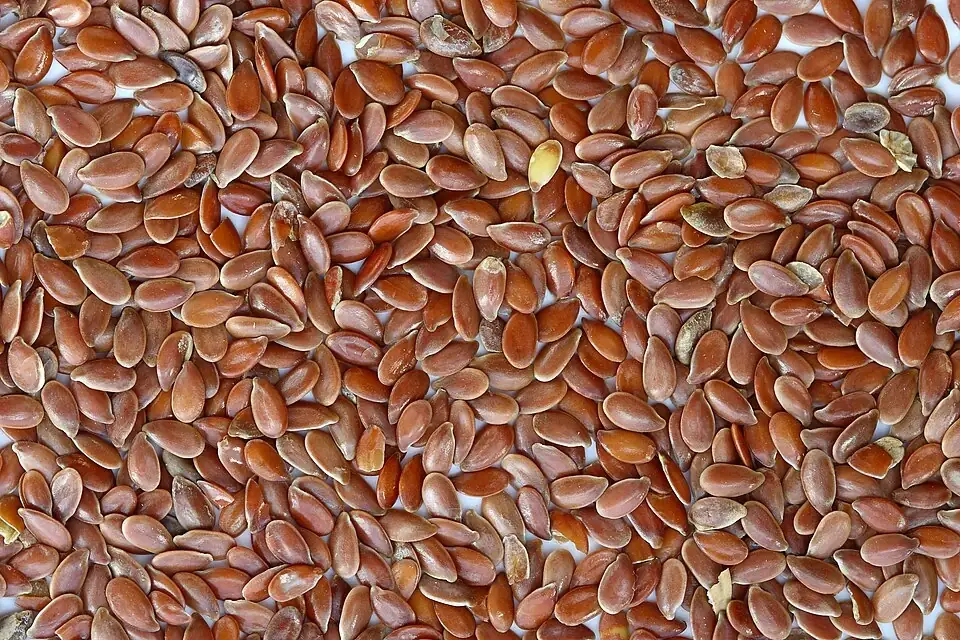
Brown flaxseeds before milling
NutritionLong-term healthUnder 10 min · Easy · Low
Reviewed Sep 29, 2026
Save

Scientific evidence

What the research shows

Outcome assessments based on research, including its uncertainties and limitations.

Blood pressure in people with hypertension

Finding: Benefit supportedCertainty: Limitedstudies found a benefit from doing this

Evidence basis: randomised trials

Flaxseed trials suggest lower blood pressure in hypertension, with substantial uncertainty.

Population: People with hypertension in five trials; the milled-flaxseed trial enrolled 110 patients with peripheral artery disease.

Research details

Summary

A 2024 meta-analysis of five randomized trials estimated a systolic reduction of 8.64 mmHg (95% CI 1.87 to 15.41 lower) and a diastolic reduction of 4.87 mmHg (95% CI 1.37 to 8.37 lower). In a six-month trial, 110 patients with peripheral artery disease received foods containing 30 g/day of milled flaxseed or placebo; benefit was selective for hypertensive patients. The pooled result covers flaxseed interventions and should not be treated as an identical ground-seed protocol in every trial.

Why this certainty

Limited certainty reflects randomized comparisons but few trials, heterogeneous protocols and wide confidence intervals. A targeted adjunct is more defensible than a general health or disease-prevention claim.

Limitations

Five trials are a small evidence base, and the full review reports high heterogeneity between studies. Formulations, participants and duration differ. Blood-pressure changes do not establish fewer cardiovascular events, and effects in normotensive people are not established.

Effect estimate

Systolic BP: -8.64 mmHg (95% CI -15.41 to -1.87) in five hypertension trials.

What people say

Who discusses this?

Public statements, with positions specific to each source and topic. These views do not determine the scientific evidence assessment.

What the research shows ↑

No sourced public statements added for this habit yet. This does not mean no one discusses it.

Practical steps and precautions

How to try it

  1. Discuss adding flaxseed with your care team if you have hypertension, especially if you take medicines.
  2. Choose food-grade ground or milled flaxseed and follow its preparation instructions; the six-month trial used it in foods.
  3. Start with a small tolerated food amount and include fluids; the 30 g/day trial dose is context, not a requirement.
  4. Continue prescribed treatment and blood-pressure monitoring; do not change medication based on this food alone.

Precautions

  • Higher supplemental amounts may cause bloating, fullness or diarrhoea.
  • Check possible medicine interactions, including anticoagulant or antiplatelet drugs, with a clinician or pharmacist.
  • Do not use raw or unripe seeds; use a food product prepared according to its instructions.
  • Supplement safety in pregnancy and breastfeeding is uncertain; get individual advice before using it for treatment.

References

Flaxseed Lowers Blood Pressure in Hypertensive Subjects: A Meta-Analysis of Randomized Controlled Trials.

Fazeli Moghadam E, Khaghani L, Shekarchizadeh-Esfahani P. · Clinical nutrition research · 2024

Systematic review and meta-analysis of five randomized trials in hypertensionVerified from full text
Open original source

Potent antihypertensive action of dietary flaxseed in hypertensive patients.

Rodriguez-Leyva D, Weighell W, Edel AL, LaVallee R, Dibrov E, Pinneker R, Maddaford TG, Ramjiawan B, Aliani M, Guzman R, Pierce GN. · Hypertension (Dallas, Tex. : 1979) · 2013

Double-blinded placebo-controlled randomized trial in 110 patients with peripheral artery diseaseVerified from abstract
Open original source

Background and safety references

These support context and precautions; they are separate from assessed outcome sources.

Flaxseed and Flaxseed Oil

National Center for Complementary and Integrative Health · National Center for Complementary and Integrative Health · 2025

Government reportInstitutional guidance; publisher page retrieved 2026-09-29Verified from full textBackground or safety reference
Open original source

Community

Discussion

Have you tried this? What helped or made it difficult?

Reader experiences are separate from the scientific evidence. Explore all discussions

No discussions yet.

Be the first to ask a question or share your experience.

Sign in to vote or join the discussion.

Explore other habits in a shared category. Each has its own evidence and precautions.

Editorial history and review method

Revision 2 · Approved for publication · Codex (publication approval explicitly authorized by site owner; category migration)

Prepared and checked with AI. Publication approval does not imply independent expert review. Request a correction.

Added after overlap review on 2026-09-29. Retrieved original research metadata and abstracts; statements in videos remain separate from scientific evidence. Independent editorial approval remains pending. Recheck the narrow population and outcome framing, the effect direction, and all implementation advice before public approval. Publication release 2026-10-04: site owner authorized a bounded AI audit and release of this exact revision. See docs/release-audit-2026-10-04.md for source-check findings and limits. No independent health-professional or peer review is claimed. Category migration 2026-10-04: removed the separate goals field; categories: Nutrition, Long-term health → Nutrition, Long-term health. Research assessments, sources, guidance, precautions, and evidence review dates are unchanged. This revision awaits publication approval; no new evidence review is claimed. Publication approval 2026-10-04: site owner explicitly accepted all current category-migration revisions for deployment and requested that remaining limitations be retained in docs/content-review-backlog.md. Approval applies to this exact content revision. No new evidence review, independent expert review, or clinical validation is claimed; existing precautions and disclosures remain in effect.