
Skip to content
Back to results

Plan carbohydrate fueling for long or demanding exercise

Plan suitable carbohydrate foods or drinks around prolonged or demanding exercise, and practise the strategy before using it during an event.

At a glance

  • Evidence: Carbohydrate intake during prolonged endurance exercise improves performance on average.Acute endurance exercise performance · Moderate certainty · Randomized intervention
  • What’s uncertain: Benefits depend on the session; ordinary short workouts do not automatically need sports fuel.
  • First step: Check the session demands and practise a familiar food or drink before an event.
  • Before you try it: Use an individualized exercise plan if you take glucose-lowering medicines. All precautions

Takeaway

Reviews of human exercise trials support carbohydrate intake during prolonged endurance exercise, with larger effects in longer events and time-to-exhaustion tests. Resistance-exercise evidence suggests greater training volume in some longer or fasted sessions, rather than a universal need for pre-workout sugar. These are acute performance findings, not proof of fat loss, greater long-term muscle growth or improved longevity. Match the strategy to the session and practise food tolerance rather than copying elite-athlete quantities.

ExerciseNutritionEnergyUnder 10 min · Easy · Low
Reviewed Oct 3, 2026
Save

Scientific evidence

What the research shows

Outcome assessments based on research, including its uncertainties and limitations.

Acute endurance exercise performance

Finding: Benefit supportedCertainty: Moderatestudies found a benefit from doing this

Evidence basis: randomised trials

Carbohydrate intake during prolonged exercise improves performance on average.

Population: Adults performing prolonged endurance exercise in controlled studies of carbohydrate intake versus placebo or control.

Research details

Summary

A 96-study meta-analysis of carbohydrate solutions found an overall performance SMD of 0.43 (95% CI 0.35 to 0.51). A later 136-study review also found benefits, with larger effects during longer events and on time-to-exhaustion tests than time trials. These findings support a context-dependent fueling strategy, not a universal product or dose.

Why this certainty

Moderate because large controlled-study syntheses support an acute performance effect. Protocol heterogeneity and differences between laboratory capacity and competition limit precision and generalization.

Limitations

Studies varied in training status, duration, comparator and formulation, and the reviews include overlapping trials. Time-to-exhaustion tests are not identical to real-world race performance; findings do not establish the same effect for every food or personal gut tolerance. The reviews synthesize controlled intervention studies; random allocation was not confirmed for every included trial in the retrieved material.

Effect estimate

Endurance-performance SMD 0.43 (95% CI 0.35 to 0.51), 96-study review.

Training volume during a resistance-exercise session

Finding: Mixed evidenceCertainty: Limitedstudies disagree, or the effect depends on who is studied

Evidence basis: randomised trials

Extra carbohydrate can increase training volume in some long or fasted lifting sessions.

Population: Healthy adults in acute crossover comparisons of carbohydrate with placebo or water during resistance exercise.

Research details

Summary

A review of 21 crossover studies with 226 participants found higher session volume with carbohydrate (SMD 0.61). Subgroup effects were more apparent in sessions longer than 45 minutes or after at least eight hours of fasting. The number of maximal-effort sets modified the effect; the findings do not show that every lifting session requires extra fuel.

Why this certainty

Limited for routine application because effects depend on the training context and the evidence addresses acute volume. The result is weaker support for short, fed, lower-volume sessions.

Limitations

Small samples and subgroup analyses limit confidence. More work in one session is not a measured long-term gain in strength or muscle mass, and the abstract did not report a confidence interval for the pooled volume estimate.

What people say

Who discusses this?

Public statements, with positions specific to each source and topic. These views do not determine the scientific evidence assessment.

What the research shows ↑

Practical steps and precautions

How to try it

  1. Decide whether the session is long, unusually demanding or followed by another session soon; routine meals are often sufficient for short or easy activity.
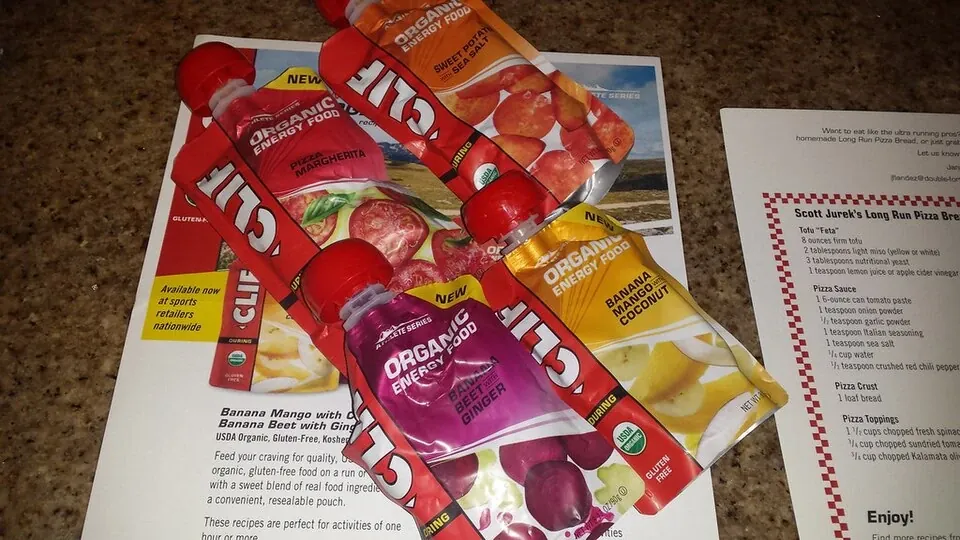
  2. Choose familiar carbohydrate foods, drinks or gels that suit the activity and your stomach, and include fluids appropriate to the conditions.
  3. Practise the same food, timing and carrying arrangements in training before an event; adjust if nausea, cramping or other discomfort occurs.
  4. Account for this fuel within your overall diet. Seek a sports dietitian for long events, high training volume or a complex medical nutrition plan rather than guessing a universal hourly dose.

Precautions

  • People with diabetes or glucose-lowering medicines need an individualized exercise and carbohydrate plan.
  • Sports fuel has a specific exercise use; frequent sugary drinks between ordinary daily activities remain a different habit.

References

The ergogenic effects of acute carbohydrate feeding on endurance performance: a systematic review, meta-analysis and meta-regression.

Ramos-Campo DJ, Clemente-Suárez VJ, Cupeiro R, Benítez-Muñoz JA, Andreu Caravaca L, Rubio-Arias JÁ. · Critical reviews in food science and nutrition · 2024

Systematic reviewSystematic review and meta-analysis of controlled exercise supplementation studiesVerified from abstract
Open original source

Meta-Analysis of Carbohydrate Solution Intake during Prolonged Exercise in Adults: From the Last 45+ Years' Perspective.

Bourdas DI, Souglis A, Zacharakis ED, Geladas ND, Travlos AK. · Nutrients · 2021

Systematic reviewSystematic review and meta-analysis of controlled exercise supplementation studiesVerified from abstract
Open original source

The Ergogenic Effects of Acute Carbohydrate Feeding on Resistance Exercise Performance: A Systematic Review and Meta-analysis.

King A, Helms E, Zinn C, Jukic I. · Sports medicine (Auckland, N.Z.) · 2022

Systematic reviewSystematic review and meta-analysis of randomized intervention trialsVerified from abstract
Open original source

Community

Discussion

Have you tried this? What helped or made it difficult?

Reader experiences are separate from the scientific evidence. Explore all discussions

No discussions yet.

Be the first to ask a question or share your experience.

Sign in to vote or join the discussion.

Explore other habits in a shared category. Each has its own evidence and precautions.

Editorial history and review method

Revision 2 · Approved for publication · Codex (publication approval explicitly authorized by site owner; category migration)

Prepared and checked with AI. Publication approval does not imply independent expert review. Request a correction.

Verified the retrieved human-study abstracts and original-publisher video metadata. Independent editorial approval remains pending; recheck applicability, uncertainty and adapted implementation before approval. Publication release 2026-10-04: site owner authorized a bounded AI audit and release of this exact revision. See docs/release-audit-2026-10-04.md for source-check findings and limits. No independent health-professional or peer review is claimed. Category migration 2026-10-04: removed the separate goals field; categories: Exercise, Nutrition, Energy → Exercise, Nutrition, Energy. Research assessments, sources, guidance, precautions, and evidence review dates are unchanged. This revision awaits publication approval; no new evidence review is claimed. Publication approval 2026-10-04: site owner explicitly accepted all current category-migration revisions for deployment and requested that remaining limitations be retained in docs/content-review-backlog.md. Approval applies to this exact content revision. No new evidence review, independent expert review, or clinical validation is claimed; existing precautions and disclosures remain in effect.